
10 Simple Ways to Make Your Home Safer


Your home should be a place where you can feel comfortable and secure. While no home can be completely free from accidents or security risks, a few practical changes can help reduce common hazards and make everyday life safer.
You do not need expensive equipment or a major renovation to get started. From improving lighting to checking smoke alarms, these ten simple steps can help you create a safer environment for yourself and your family.
1. Check Your Smoke and Carbon Monoxide Alarms
Smoke and carbon monoxide alarms provide an important early warning when something is wrong. Install them in appropriate areas of your home and test them regularly to make sure they are working.
Replace batteries and alarms according to the manufacturer's instructions. Everyone in the household should also recognize the sound of each alarm and know what to do when it activates.

2. Improve Lighting Around Your Home
Dark hallways, stairs, entrances, and outdoor paths can increase the risk of trips and falls. Make sure frequently used areas have enough lighting, especially at night.
Motion-activated outdoor lights can also make entrances easier to see. Consider night-lights for hallways or bathrooms that household members use after dark.
3. Keep Walkways Clear
Shoes, electrical cords, toys, bags, and other objects can quickly become tripping hazards. Keep floors, hallways, and stairs free from unnecessary clutter.
Pay particular attention to areas that people walk through frequently. A few minutes of regular organization can prevent obstacles from building up.
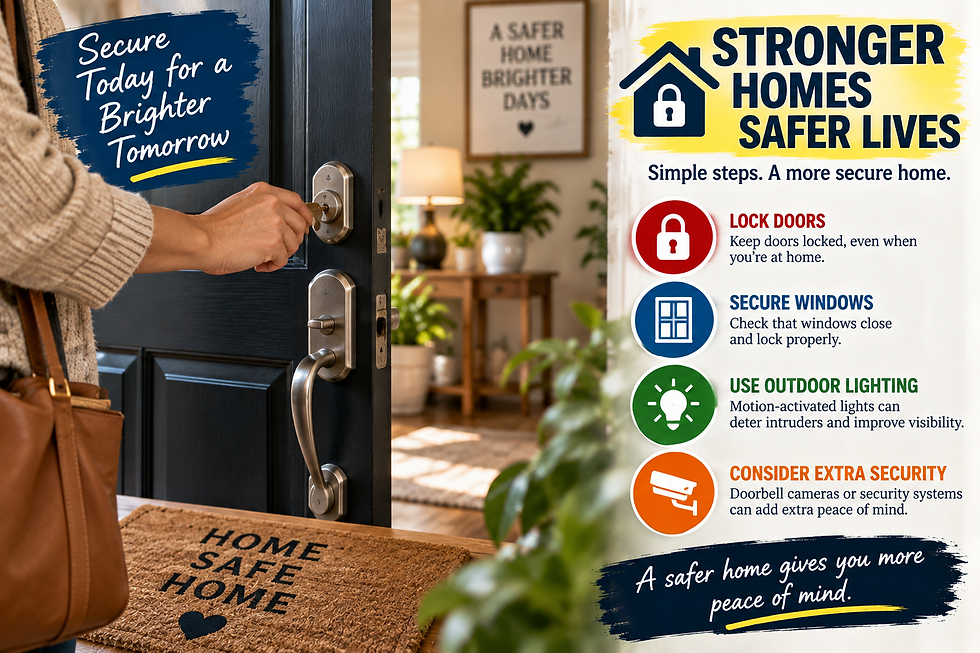
4. Secure Doors and Windows
Check exterior doors and windows to make sure they close and lock properly. Repair damaged locks, frames, or latches rather than leaving them for later.
Get into the habit of locking doors and accessible windows when you leave home or go to sleep.
5. Prevent Bathroom Falls
Bathrooms can become slippery because of water and smooth surfaces. Use non-slip mats where appropriate and clean up water on the floor promptly.
Grab bars can provide additional support for people who need help maintaining balance around showers, bathtubs, and toilets.
6. Store Medicines Safely
Keep medications in a secure location and follow storage instructions on their labels. Medicines should be kept away from children and anyone who could accidentally misuse them.
Regularly check your medicine cabinet for expired or unwanted products and dispose of them appropriately.
7. Practice Kitchen Safety
Never leave active cooking unattended for long periods. Keep towels, paper products, and other flammable materials away from stovetops and open flames.
Store sharp utensils safely and keep frequently used items within comfortable reach to reduce unnecessary climbing or stretching.
8. Check Electrical Cords and Outlets
Inspect cords, plugs, and outlets for visible damage. Frayed wires, loose plugs, and overloaded outlets should not be ignored.
Avoid running cords through busy walkways or placing them where they could be damaged by furniture.
9. Prepare for Emergencies
Keep basic emergency supplies in an accessible location. Flashlights, batteries, first-aid supplies, important contact information, and necessary medications can be useful during unexpected situations.
Create a simple emergency plan so everyone knows how to leave the home safely and where to meet.

10. Review Your Home Regularly
Home safety is not a one-time project. Walk through your home periodically and look for new hazards, damaged equipment, blocked exits, or maintenance problems.
Small issues are usually easier to address when you notice them early.
Final Thoughts
Making your home safer does not have to be complicated. Simple habits such as clearing walkways, checking alarms, securing entrances, and preparing for emergencies can make a meaningful difference.
Start with the areas that need the most attention and improve them one at a time. Regular checks and small changes can help create a home that feels safer, more organized, and better prepared for everyday life.
Comments