
The Battle of the Bulge: Hitler’s Last Major Offensive in the West


By December 1944, Allied armies had liberated much of France and were approaching Germany's borders. After the successful D-Day landings and months of fighting across Western Europe, Nazi Germany appeared to be moving steadily toward defeat.
Adolf Hitler, however, was preparing one final major offensive in the West.
On December 16, German forces launched a massive surprise attack through the densely forested Ardennes. The fighting that followed became known as the Battle of the Bulge.
Germany Launches a Surprise Offensive
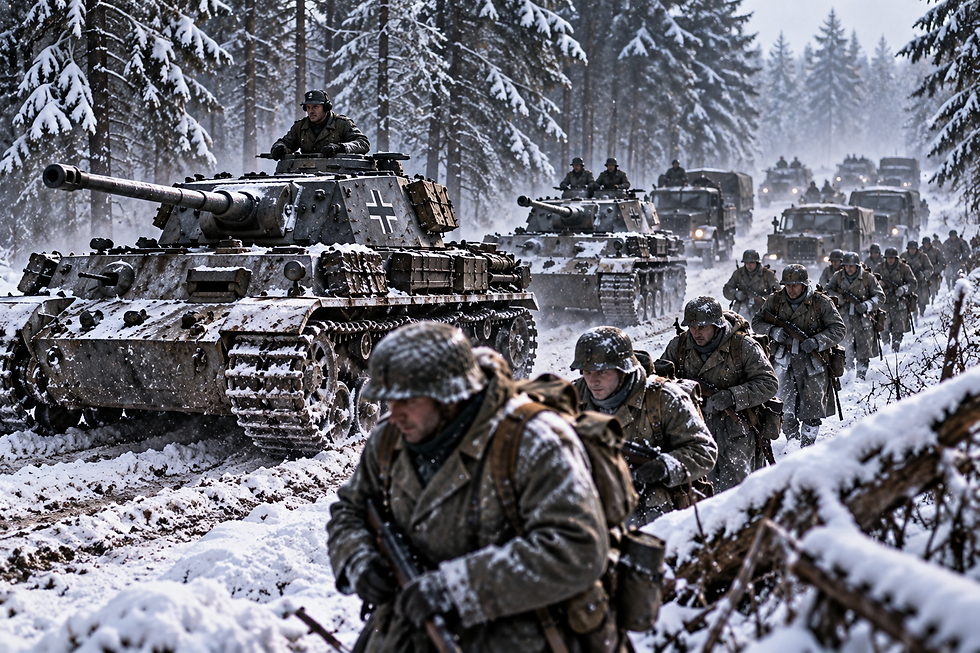
Hitler hoped the attack could split the American and British armies and capture the important Belgian port of Antwerp.
If successful, he believed Germany might disrupt Allied supply lines and force the Western Allies to negotiate.
The Germans chose the Ardennes partly because Allied commanders considered the region relatively quiet. Poor winter weather also grounded much of the powerful Allied air force.
German troops and tanks struck American positions before dawn on December 16.
The attack surprised many units and created a large bulge in the Allied front, giving the battle its famous name.
American Forces Fight to Hold the Line
The German advance initially created confusion.
Some American positions were overwhelmed, while other units resisted despite being outnumbered. Roads became crowded with retreating soldiers, reinforcements, civilians, and military vehicles.
German forces needed to advance quickly because their fuel and supplies were limited.
American resistance slowed them down.
One of the most important struggles developed around the Belgian town of Bastogne, where several major roads intersected.
The Siege of Bastogne
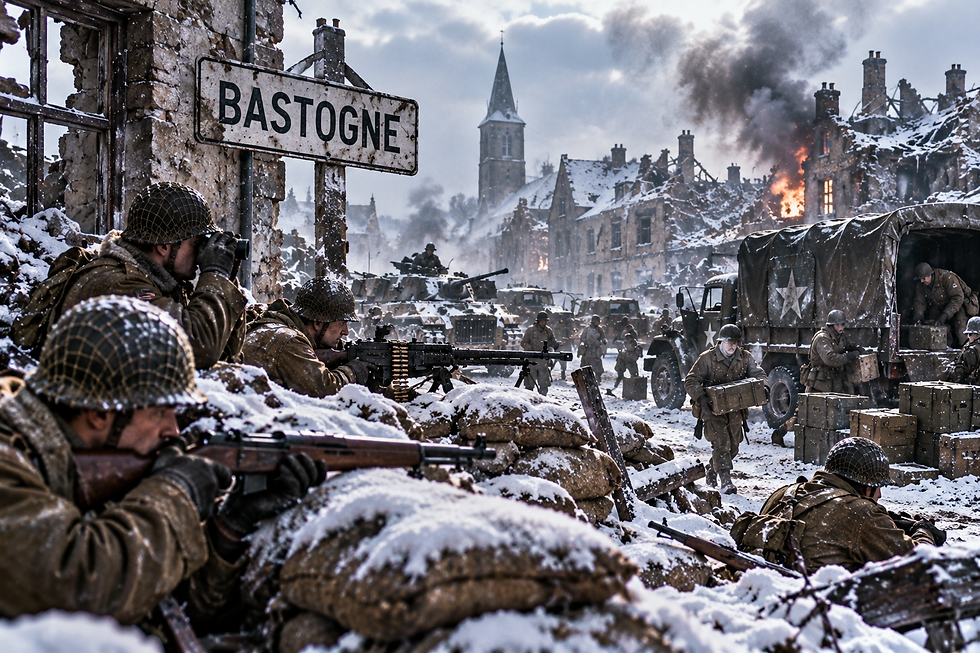
German forces surrounded Bastogne, trapping American defenders that included soldiers from the 101st Airborne Division.
The Americans faced freezing temperatures, shortages of ammunition and medical supplies, and repeated German attacks.
When German commanders demanded their surrender, Brigadier General Anthony McAuliffe famously replied, "Nuts!"
The defenders continued fighting.
Improving weather eventually allowed Allied aircraft to return to the skies and deliver supplies while attacking German positions.
On December 26, forces from General George S. Patton's Third Army reached Bastogne and broke through the German encirclement.
The Offensive Begins to Fail
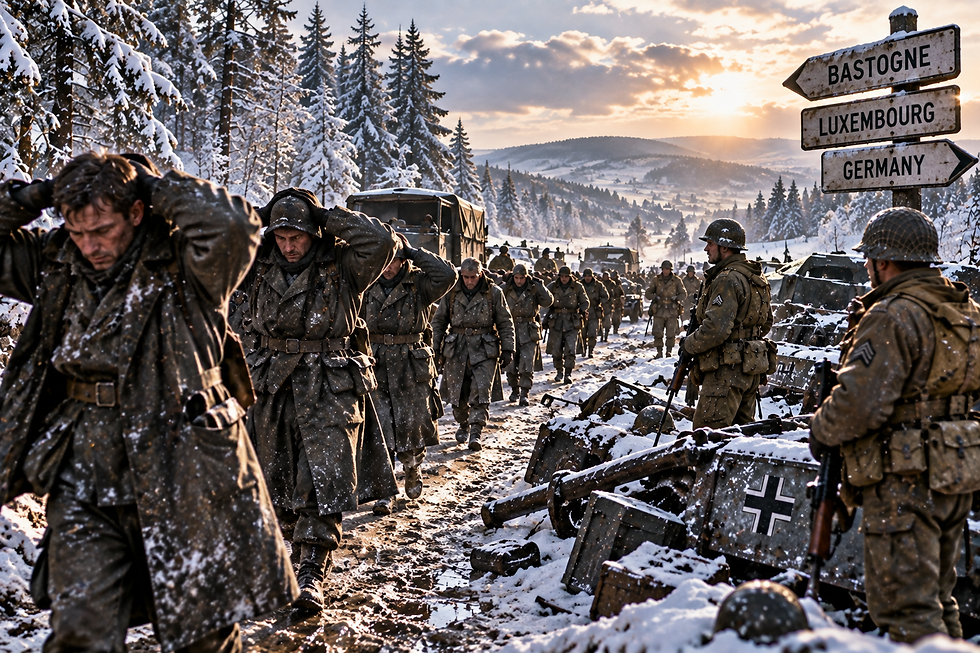
Germany's advance was already losing momentum.
Stubborn Allied resistance delayed German forces, while shortages of fuel made it increasingly difficult for armored units to continue moving.
Once the weather cleared, Allied aircraft attacked German troops, vehicles, and supply routes.
The Allies gradually pushed the Germans back toward their original positions.
By late January 1945, the bulge in the Allied line had largely disappeared.
The Road Into Germany
The Battle of the Bulge was one of the largest and bloodiest battles fought by American forces during World War II.
Germany suffered losses it could not easily replace, particularly in experienced troops, tanks, aircraft, and equipment.
The offensive temporarily slowed the Allied advance, but it could not reverse Germany's deteriorating military position.
Within months, Allied armies crossed into Germany while Soviet forces advanced from the east.
Hitler's final major gamble in the West had failed. Instead of dividing the Allies, the Battle of the Bulge exhausted resources Germany desperately needed for the battles still to come.
Comments