
D-Day: How Allied Forces Opened the Road to Victory in Europe

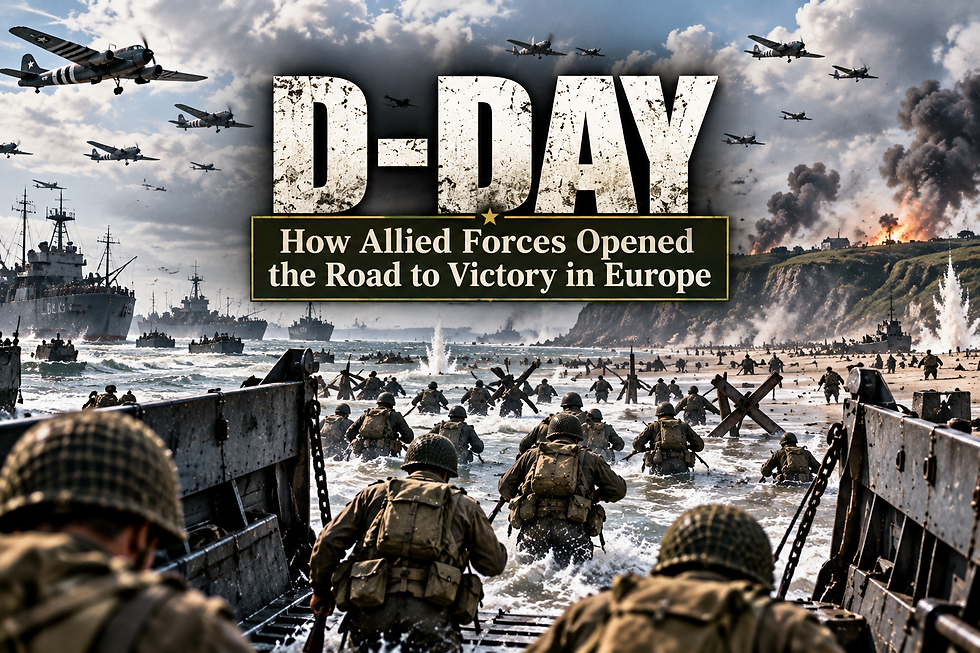
Before sunrise on June 6, 1944, thousands of Allied ships and aircraft approached the coast of Normandy, France.
The operation that followed became one of the largest amphibious invasions in history. American, British, Canadian, and other Allied forces crossed the English Channel to begin liberating Western Europe from Nazi Germany.
Known as D-Day, the invasion did not end World War II. But it opened a crucial new front that helped place Germany on the road to defeat.
Planning the Invasion of France
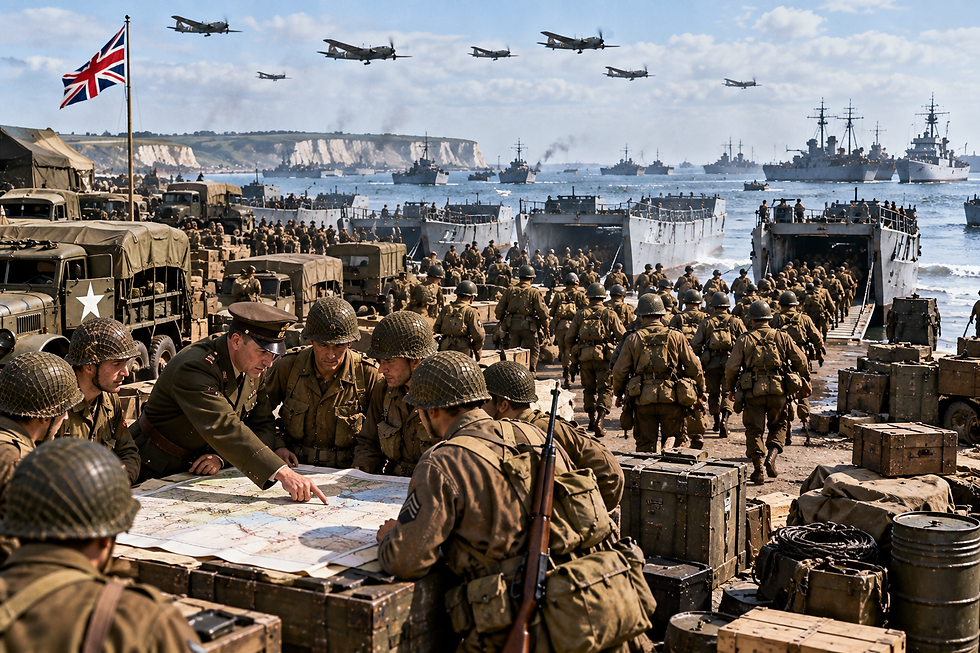
By 1944, Nazi Germany controlled much of Western Europe.
The Soviet Union had been fighting German forces on the Eastern Front, while the Western Allies prepared to invade German-occupied France. The massive invasion plan was known as Operation Overlord.
Preparing it required extraordinary coordination.
Troops, aircraft, landing craft, warships, vehicles, ammunition, and supplies gathered in Britain. Allied commanders also used deception to convince Germany that the main invasion might come at Pas-de-Calais rather than Normandy.
Even the weather became critical. Poor conditions forced commanders to postpone the invasion from June 5 to June 6.
Allied Forces Cross the Channel
The invasion began before troops reached the beaches.
Thousands of paratroopers landed behind German defenses during the night. Their missions included securing bridges, disrupting communications, and preventing German reinforcements from reaching the coast.
Meanwhile, an enormous naval force crossed the English Channel.
At dawn, Allied troops began landing along five beaches code-named Utah, Omaha, Gold, Juno, and Sword.
American forces landed at Utah and Omaha, while British and Canadian troops assaulted the other beaches.
The Fight for the Beaches
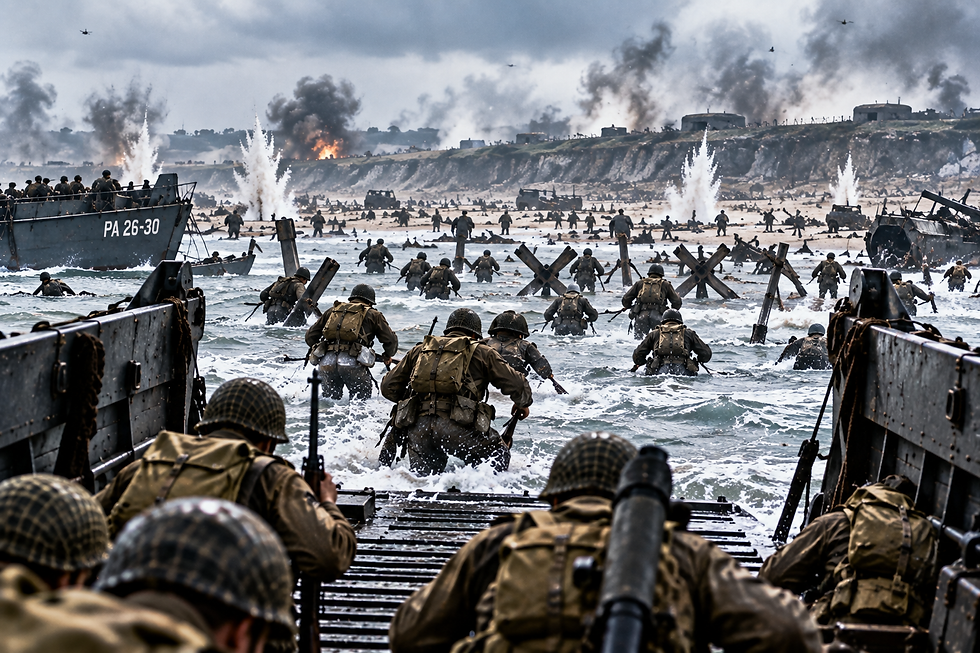
Conditions differed dramatically across the invasion zone.
At Utah Beach, American forces encountered lighter resistance and advanced inland relatively quickly.
Omaha Beach became far more deadly.
German defenses overlooked the shoreline, and American troops faced machine-gun fire, artillery, obstacles, and confusion as they struggled to move beyond the beach.
Despite severe losses, small groups of soldiers pushed through German positions and gradually established a foothold.
By the end of June 6, the Allies had successfully landed more than 150,000 troops in Normandy.
Breaking Out of Normandy
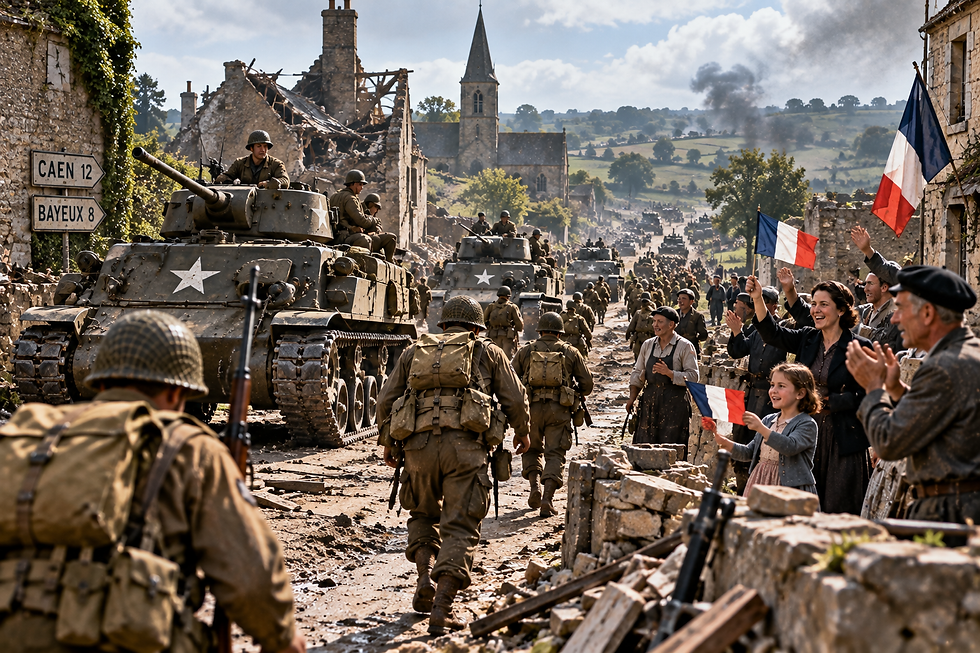
Securing the beaches was only the beginning.
Allied forces still had to move through Normandy's difficult countryside, where hedgerows provided strong defensive positions for German troops.
Fighting continued for weeks as the Allies brought more soldiers, tanks, vehicles, and supplies into France.
The capture of key towns and eventual breakout from Normandy allowed Allied armies to advance rapidly.
Paris was liberated in August 1944.
The Road Toward Germany
D-Day forced Germany to fight powerful Allied armies in Western Europe while continuing its enormous struggle against the Soviet Union in the east.
The campaign that began on Normandy's beaches continued across France, Belgium, and toward Germany itself.
Less than a year after D-Day, Nazi Germany surrendered in May 1945.
The success of June 6 depended on years of preparation and the actions of soldiers, sailors, airmen, resistance fighters, and civilians from many Allied nations.
D-Day was not the final battle for Europe, but it opened the western road that helped lead the Allies to victory.
Comments