
THE DIFFERENCE BETWEEN BEING RICH AND BUILDING WEALTH

Updated: Sep 2

PART 1: WHY THE DISTINCTION MATTERS MORE THAN EVER
INTRODUCTION
Many people spend years pursuing a higher income believing it will automatically lead to financial security. Promotions, bonuses, successful businesses, or windfalls certainly create opportunity, but they do not guarantee lasting prosperity. The truth is that being rich and building wealth are two very different financial outcomes. Understanding that difference can completely reshape the way you make decisions about earning, spending, saving, and investing.
RICH VS. WEALTH
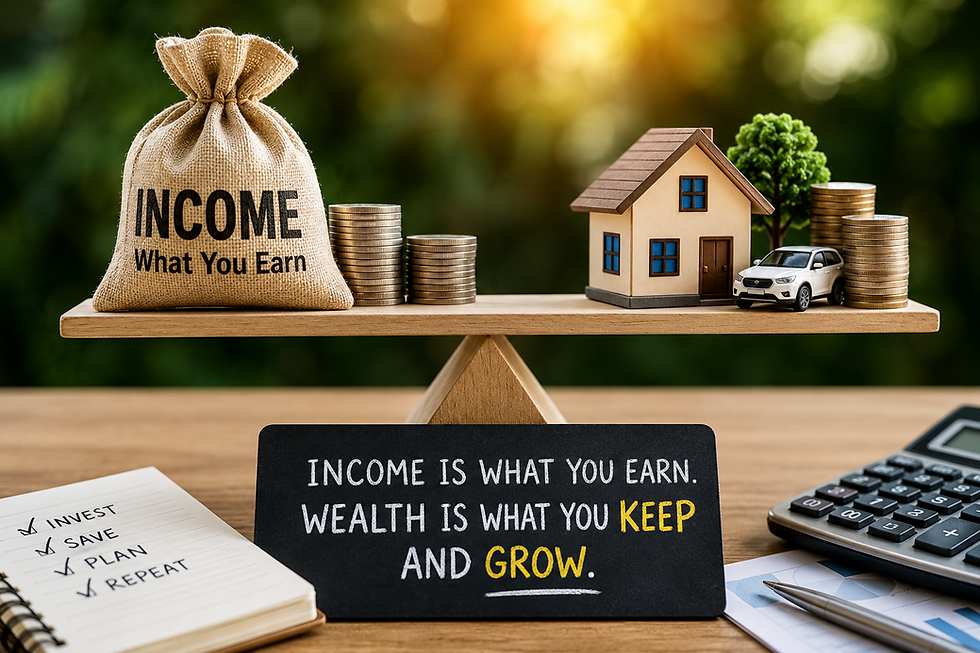
Being rich generally refers to having a high income or enjoying an expensive lifestyle. Wealth refers to the assets you accumulate, the investments you own, and the financial foundation that continues supporting you even if your paycheck stops. Someone earning $500,000 per year can still live paycheck to paycheck, while another family earning a fraction of that income may quietly become millionaires through disciplined investing.
INCOME CREATES OPPORTUNITY
Income is important because it provides the fuel to build wealth. However, income alone cannot overcome overspending. Every raise presents a choice: consume more today or invest more for tomorrow. Wealth builders consistently choose to direct a meaningful portion of every increase toward long-term investments.
LIFESTYLE INFLATION
One of the biggest threats to wealth is lifestyle inflation. Bigger salaries often bring bigger homes, newer vehicles, luxury vacations, subscriptions, and monthly payments. Expenses quietly rise until they consume nearly every dollar earned. Escaping this cycle is one of the defining characteristics of financially successful people.
NET WORTH
Instead of measuring success only by salary, wealth builders track net worth—the difference between everything they own and everything they owe. Growing net worth demonstrates real financial progress because it reflects increasing ownership rather than increasing consumption.
FREEDOM
Ultimately, wealth provides choices. It allows you to retire when you choose, change careers, help family members, weather emergencies, support causes you believe in, and spend more time doing what matters most. Money becomes a tool that expands freedom rather than a source of constant stress.

PART 2: THE HABITS THAT BUILD LASTING WEALTH
PAY YOURSELF FIRST
Successful investors automate their savings. Rather than hoping money remains at the end of the month, they invest first and learn to live comfortably on the remainder. This single habit removes emotion from saving.
LIVE BELOW YOUR MEANS
Living below your means is not about deprivation. It simply means spending less than you earn and consistently investing the difference. The gap between income and spending is where wealth begins.
AVOID HIGH-INTEREST DEBT
Credit-card balances and other high-interest consumer debt can quietly destroy financial progress. Paying them off often provides a guaranteed return equal to the interest rate you avoid.
INVEST CONSISTENTLY
Time is one of the greatest advantages available to investors. Small monthly investments made consistently over decades often outperform sporadic attempts to time the market. Compound growth rewards patience.
BUY ASSETS
Wealth builders intentionally acquire assets that may appreciate or generate income, such as diversified stock funds, retirement accounts, rental real estate, or businesses. They avoid confusing expensive possessions with investments.
KEEP LEARNING
Financial literacy compounds just like investments. Reading books, studying taxes, understanding retirement accounts, and learning about risk help people make smarter decisions throughout life.
MULTIPLE INCOME STREAMS
Diversifying income through dividends, rental income, consulting, online businesses, royalties, or side projects provides additional stability and accelerates investing opportunities.
LONG-TERM THINKING
Wealth rarely appears overnight. Markets rise and fall, economies expand and contract, but disciplined investors who stay focused on decades instead of days are often rewarded.
COMMON MISTAKES THAT PREVENT WEALTH
Common mistakes include spending every raise, delaying investing until 'later,' carrying expensive debt, chasing get-rich-quick schemes, neglecting retirement planning, and comparing your lifestyle with others. Wealth is usually lost through repeated small mistakes rather than one catastrophic decision.

FINAL THOUGHTS
Being rich can be temporary. Building wealth is enduring. Income may attract attention, but wealth quietly creates security, opportunity, and independence. Nearly every financially independent person reaches that destination through ordinary habits practiced consistently over many years: spending less than they earn, investing regularly, avoiding unnecessary debt, continuing to learn, and allowing time to work in their favor.
Whether your goal is an early retirement, leaving a legacy for your children, supporting your favorite charities, or simply enjoying peace of mind, wealth is built one thoughtful financial decision at a time. Start where you are, invest consistently, and remember that true financial success is measured not by what you spend, but by the freedom you create.
Comments