
The GI Bill: How Veterans Helped Build Postwar America


When millions of American servicemen and women returned home after World War II, the United States faced an enormous challenge.
Veterans needed jobs, education, housing, and a way to transition back into civilian life. Leaders also remembered the difficulties many veterans had experienced after World War I.
The Servicemen's Readjustment Act of 1944, better known as the GI Bill, offered a different path. Its benefits helped millions of veterans pursue opportunities that would transform their lives and postwar America.
Preparing Veterans for Civilian Life
President Franklin D. Roosevelt signed the GI Bill into law on June 22, 1944, before World War II had ended.
The legislation provided several forms of assistance to eligible veterans. These included education and training benefits, unemployment payments, and government-backed loans for homes, farms, and businesses.
The scale of the program became enormous as servicemembers returned home.
Instead of simply thanking veterans for their service, the government provided resources intended to help them establish civilian careers and financial stability.
Veterans Head to College
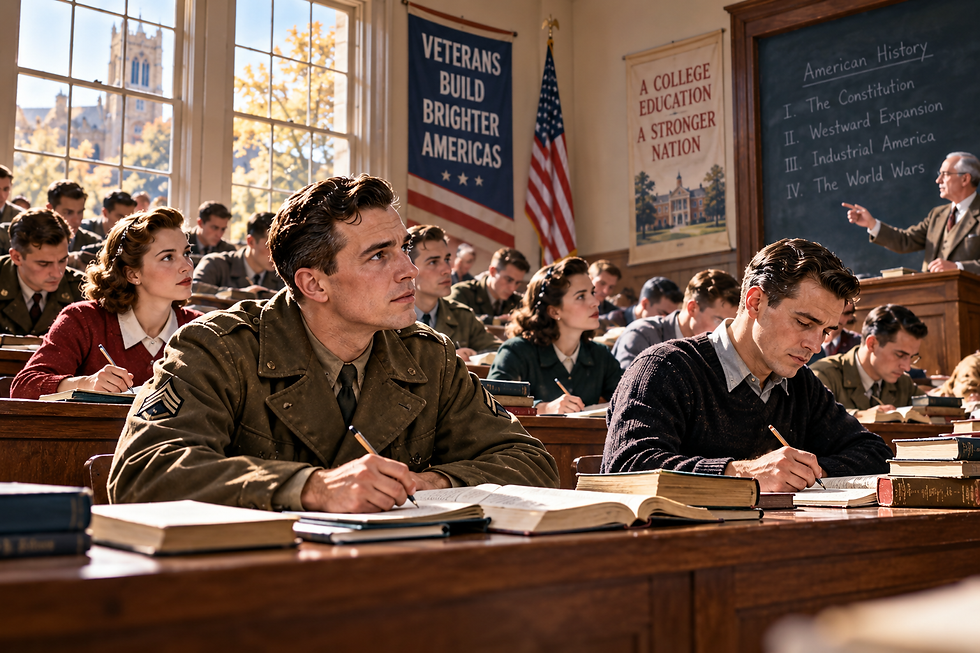
Education became one of the GI Bill's most significant benefits.
Veterans could receive assistance with tuition and living expenses while attending colleges, universities, vocational schools, and other training programs.
Campuses across the country filled with former servicemembers.
Higher education, which had previously been out of reach for many families, became accessible to a much broader portion of the population. Veterans trained to become teachers, engineers, doctors, businesspeople, and skilled workers.
Their education helped provide the growing postwar economy with millions of trained professionals.
Homeownership Expands

The GI Bill also helped reshape where Americans lived.
Government-backed loans made it easier for qualifying veterans to purchase homes with favorable terms. At the same time, builders were constructing large numbers of houses to meet growing demand.
New suburban communities expanded around American cities.
For many veterans, buying a home became an important symbol of postwar stability. Home construction also supported jobs and encouraged spending on automobiles, furniture, appliances, and other products.
Building the Postwar Economy

Veterans entered civilian life during a period of remarkable economic expansion.
Their education, home purchases, businesses, and participation in the workforce contributed to the growth of the American middle class.
However, access to these opportunities was not equal.
Black veterans and other minorities often encountered discrimination from banks, schools, housing policies, and local institutions. Although they had earned GI Bill benefits through military service, discriminatory practices frequently prevented them from receiving the same opportunities as white veterans.
A Lasting American Legacy
The GI Bill changed the relationship between military service and civilian opportunity.
Millions of veterans received education and training, while millions more benefited from home loan guarantees and other forms of assistance.
Those veterans became homeowners, professionals, entrepreneurs, and community leaders.
The GI Bill did not create postwar prosperity by itself, and its benefits were not distributed equally. Still, its influence reached far beyond the veterans who used it.
By helping millions of Americans build lives after military service, the GI Bill played an important role in expanding higher education, homeownership, and the middle class that shaped postwar America.
Comments