
How to Be an Informed Voter Without Living on the News


Being an informed voter does not mean spending every evening watching political coverage or checking your phone whenever a new headline appears.
There is simply too much information to follow everything. Campaign speeches, debates, polls, advertisements, social media posts, and breaking news can quickly become overwhelming.
A more manageable approach is to focus on the information that will actually help you understand your ballot and make your own decisions.
Start With What Is Actually on Your Ballot
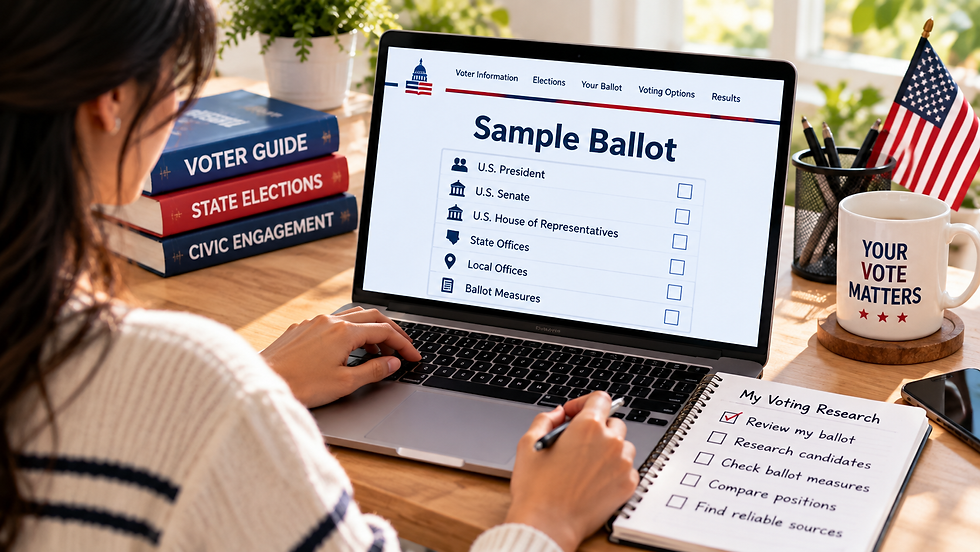
Before researching political issues broadly, find out what you will actually be voting on.
A sample ballot can show the elections, candidates, and ballot measures that will appear on your real ballot. USAGov recommends reviewing sample ballots and voter guides before going to the polls.
This gives your research a clear starting point. Instead of trying to understand every political story happening across the country, you can concentrate on the choices you will actually make.
Your state or local election office is also an important resource because election rules and ballot information can vary by state and locality.
Choose a Few Issues That Matter to You

You do not need an expert-level understanding of every policy debate.
Identify several issues you consider important. Then look at what each candidate has publicly said, proposed, or done concerning those subjects.
When possible, go beyond campaign advertisements and short social media clips. Read candidate platforms, examine relevant public records, and compare statements with documented actions.
For federal candidates, the Federal Election Commission provides public information about campaign fundraising and spending, including candidate and committee filings.
The goal is not to consume more political content. It is to find information that helps you understand the choices in front of you.
Use More Than One Source

No single news outlet, social media account, candidate, or political organization needs to provide all of your information.
When a claim seems important to your decision, see whether you can confirm it elsewhere. Look for original documents, government records, complete speeches or interviews, and reporting that provides evidence and context.
It also helps to distinguish between news reporting, analysis, commentary, campaign messaging, and advertising. They serve different purposes and should not automatically carry the same weight.
Taking a few extra minutes to trace an important claim to its source can be more useful than reading dozens of reactions to it.
Set Boundaries Around Political News
Staying informed does not require following political news all day.
Consider choosing a specific time once or twice a week to catch up. Review important developments, check credible sources, and then move on with your day.
As Election Day approaches, you can spend additional time reviewing your sample ballot and researching any candidates or measures you have not considered.
USAGov notes that voters may bring notes, voter guides, or sample ballots into the voting booth, although local rules should be checked and some polling places may restrict cell phone use.
Being Informed Is About Quality, Not Quantity
An informed voter is not necessarily the person who has watched the most political coverage.
What matters is understanding the choices on your ballot well enough to make your own decision.
Focus your attention. Check important claims. Compare reliable information. Learn the voting rules where you live.
You do not have to live on the news to participate thoughtfully. A small amount of focused research can help you approach your ballot with a clearer understanding of the choices you are being asked to make.
Comments