
How to Find a Mental Health Professional Who Fits Your Needs


Deciding to talk with a mental health professional can be an important step. Finding the right person, however, may take a little more work.
Mental health professionals have different training, specialties, treatment approaches, and personalities. Someone who works well for a friend or family member may not necessarily be the best match for you.
Instead of looking for a "perfect" therapist, focus on finding a qualified professional whose experience, approach, and practical arrangements fit your needs.
Start With What You Need Help With
Before searching for a provider, think about why you are seeking support.
Maybe you are dealing with anxiety, grief, relationship difficulties, ongoing stress, depression, or a major life change. You may also want someone who has experience working with a particular age group or situation.
Having a general idea of what you want help with can make it easier to narrow your search.
If you are unsure where to begin, a primary care provider can discuss your concerns and may be able to refer you to a mental health professional.
Understand That Professionals Have Different Roles
"Therapist" is not the only type of mental health professional.
Psychologists, counselors, clinical social workers, psychiatrists, and other qualified professionals may provide different forms of care depending on their training and licensing.
Some primarily provide psychotherapy, while certain medical professionals can also prescribe medication.
You do not need to understand every credential before asking for help. You can ask a potential provider about their qualifications, specialties, and experience with the concerns you want to address.

Ask Questions Before You Commit
An introductory conversation can tell you a lot.
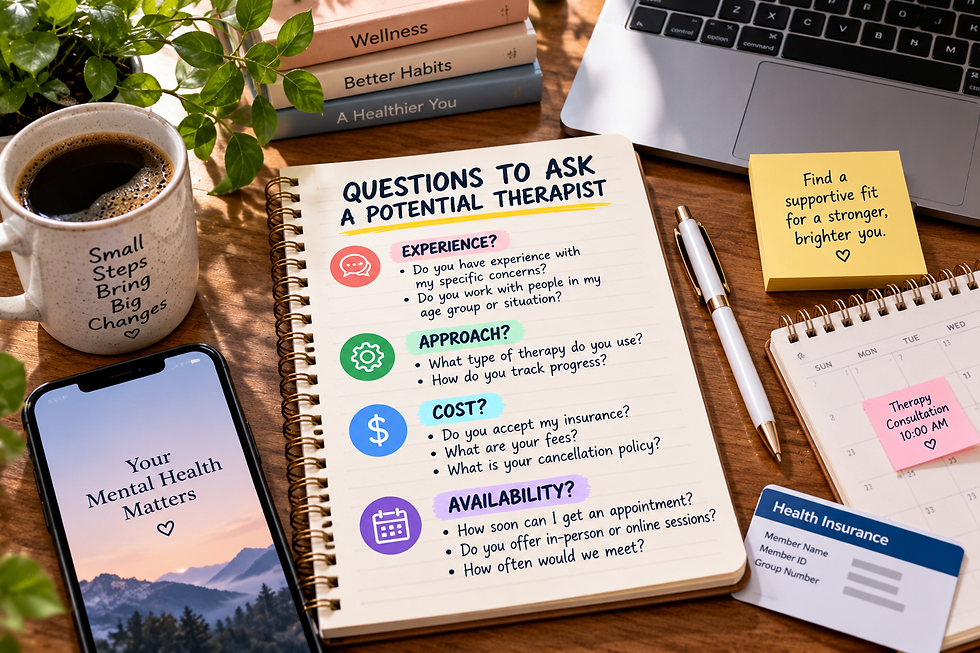
Consider asking what experience the provider has with your concerns, what type of therapy they use, how sessions usually work, and how progress is evaluated.
Practical questions matter too.
Ask about fees, insurance, appointment availability, telehealth options, cancellation policies, and how frequently you would typically meet.
Getting these details early can help you determine whether treatment realistically fits your schedule and budget.
Pay Attention to How You Feel During Sessions
Credentials and experience are important, but so is your ability to communicate openly.
You should feel able to ask questions, discuss concerns, and understand why your provider recommends a particular approach.
Building trust can take time, so one slightly awkward first appointment does not necessarily mean the relationship will not work.
Still, pay attention to whether you feel heard and respected and whether the provider takes your concerns seriously.

It Is Okay to Consider Another Provider
Finding mental health support can involve some trial and error.
If you have concerns about your treatment or do not feel that it is helping, talk with your provider. Sometimes adjusting the approach can make a difference. In other situations, another professional or type of treatment may be a better fit.
Seeking someone else does not mean you failed at therapy.
The goal is to find qualified support that meets your needs and allows you to participate comfortably in your care. Asking questions, considering your options, and speaking up about what is or is not working can help you take a more active role in that process.
Comments