
How to Learn a New Skill Without Going Back to School


Learning something new doesn't have to mean enrolling in college, sitting through exams, or working toward another degree.
Maybe you want to speak enough Italian for a future trip. Perhaps you'd like to edit family videos, repair furniture, bake bread, understand photography, or finally learn how to play the guitar.
Whatever interests you, there are more ways to learn than ever.
The challenge isn't necessarily finding information. It's choosing a practical place to begin and sticking with it long enough to make progress.
Choose Something You Actually Want to Learn
You don't need to learn something simply because it seems useful.
Interest matters.
Think about the skills you've caught yourself saying you'd like to try "someday." Maybe you've always admired people who can grow vegetables, play an instrument, use woodworking tools, or confidently take photographs.
Choose one.
Starting with genuine curiosity makes it easier to continue when the skill becomes more difficult than expected.
You also don't need a grand goal. Wanting to learn because something looks enjoyable is reason enough.
Find One Good Starting Point
The internet can give you thousands of tutorials in seconds.
That isn't always helpful.
Watching five different beginners explain five different approaches can leave you more confused than when you started.
Instead, choose one resource and follow it for a while.
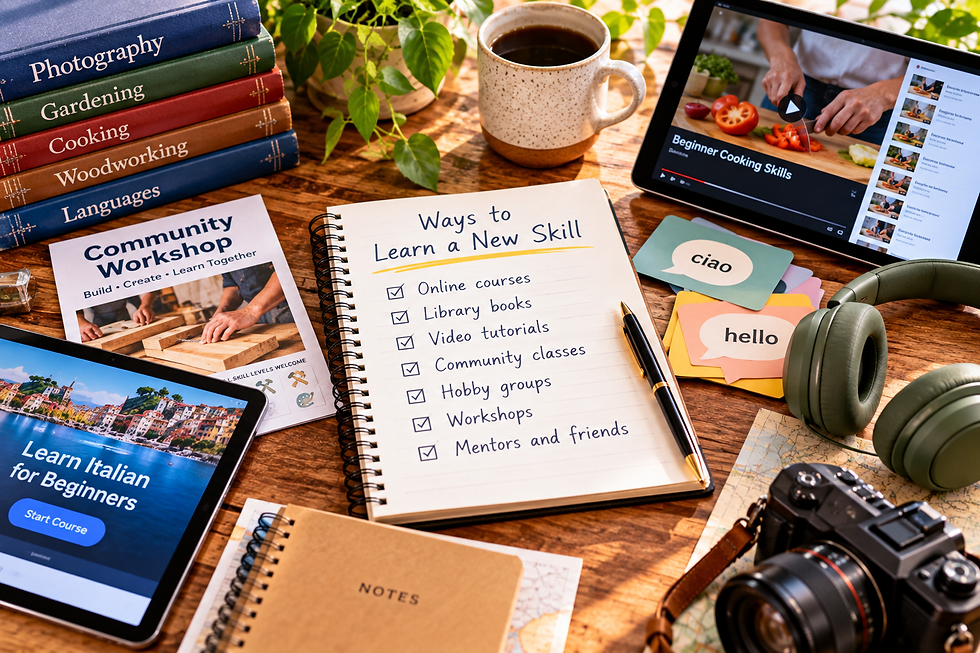
That could be a library book, an online course, a video series, a community workshop, or instructions from someone who already knows the skill.
You can explore other resources later. At the beginning, a clear path is often more useful than endless options.
Practice Before You Buy Everything
A new hobby can quickly become a shopping project.
You may convince yourself that you need expensive tools, premium materials, specialized equipment, or the newest technology before you can begin.
Usually, you don't.
Borrow equipment when possible. Buy basic supplies. Use what you already have. If there's a community workshop or library that provides equipment, start there.
Give yourself enough time to discover whether you actually enjoy the activity before investing heavily in it.
Your skill matters more than your gear.
Make Practice Small and Regular
You don't need three free hours every day to improve.
Twenty or 30 minutes a few times a week can be enough to keep moving forward.
Small sessions also make practice easier to fit into your life.
Learn three guitar chords. Practice 10 phrases in another language. Edit one minute of video. Spend half an hour learning one feature on your camera.
Progress can feel slow while it's happening.
Look back after a few months, though, and those small sessions may have added up to something substantial.

Learn With Other People
Teaching yourself doesn't mean doing everything alone.
Look for local clubs, community centers, library programs, hobby groups, workshops, or online communities related to what you're learning.
Other beginners can make the process feel less intimidating. More experienced people can answer questions that might take you hours to solve by yourself.
Learning can also become a reason to meet people you wouldn't otherwise encounter.

Let Progress Be the Goal
You don't need a certificate to prove that learning counted.
Maybe you'll never become fluent in Italian, perform guitar onstage, or sell your photographs.
That's fine.
If you can do something today that you couldn't do six months ago, you've learned.
There is no classroom required for that.
Pick something that interests you, find a place to begin, and give yourself permission to be inexperienced for a while.
Then keep practicing.
Comments