
How to Organize Your Financial Documents

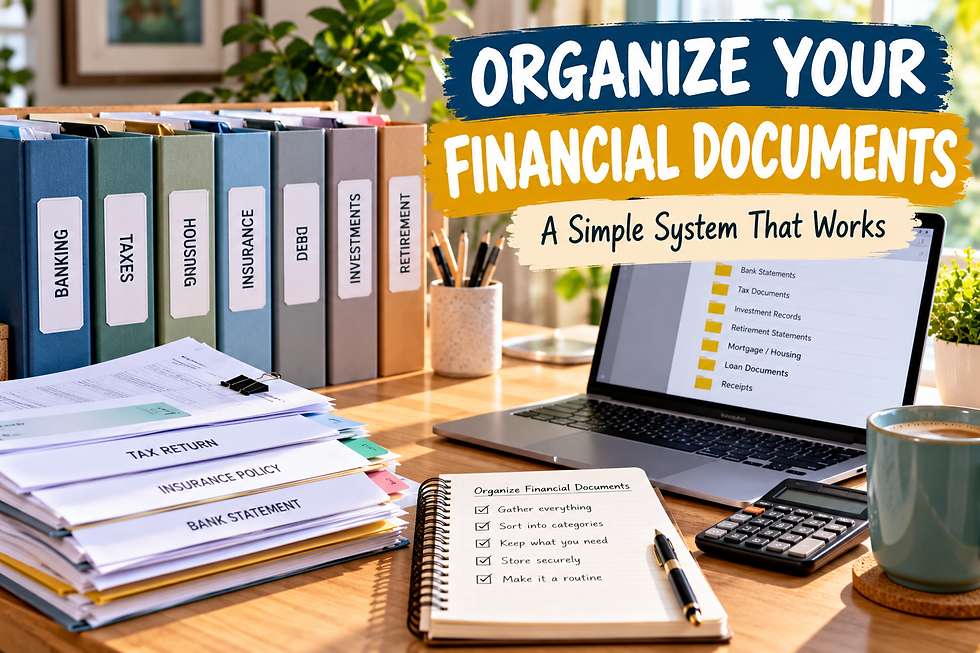
Financial paperwork has a way of piling up.
Bank statements sit in your inbox. Tax documents end up in a drawer. Insurance policies are saved somewhere on your computer. Receipts, loan records, and retirement statements can easily become scattered across different places.
Most of the time, that may not seem like a problem. Then you need an important document quickly.
Organizing your financial records doesn't require an elaborate filing system. A simple structure can make it easier to manage your money, prepare for tax season, and find important information when you need it.
Start by Gathering Everything
Before deciding how to organize your documents, figure out what you have.
Collect financial records from desks, drawers, filing cabinets, email accounts, and computer folders. You may have a combination of paper and digital documents.
Common records include bank and credit card statements, tax documents, insurance policies, mortgage or rental records, loan information, investment and retirement statements, pay records, and important receipts.
Don't worry about creating the perfect system yet.
Start by bringing everything together so you can see what needs to be organized.

Create Simple Categories
Once you've gathered your records, divide them into categories that make sense to you.
You might create separate sections for banking, taxes, housing, insurance, debt, investments, retirement, income, and major purchases.
Avoid making the system unnecessarily complicated. If you create dozens of highly specific categories, filing documents may become another task you avoid.
Use clear labels that you can recognize immediately.
For paper records, that might mean labeled folders inside a filing box or cabinet. Digital records can follow the same structure using folders on your computer or secure cloud storage.

Decide What You Actually Need to Keep
Organizing doesn't mean keeping every financial document forever.
Some records may only be useful temporarily, while others should be retained longer for tax, legal, insurance, or ownership purposes. How long you should keep a particular record depends on what it is and why you may need it.
Before destroying potentially important documents, check applicable record-retention guidance or ask an appropriate professional.
For documents you no longer need, protect your personal information. Shred sensitive paper records rather than simply putting them in the trash, and securely remove unnecessary digital files.
Protect Important Records
Some financial documents deserve additional protection.
Consider keeping important originals, such as property records and other difficult-to-replace documents, in a secure location. Digital copies of important records can provide an additional backup.
Protect digital financial files with strong passwords and appropriate account security. Avoid storing sensitive information where other people can easily access it.
It's also useful to make sure your spouse or another trusted person knows how to locate essential financial information if you become unable to access it yourself.
They don't necessarily need unrestricted access to everything. They should know where critical records and instructions can be found.

Make Organization a Routine
Even the best filing system stops working if you never maintain it.
Set aside a little time every few months to file new documents, remove records you no longer need, and check that important information is current.
Tax season can also be a useful reminder to review the previous year's financial paperwork.
The goal isn't to create a perfectly organized archive.
It's to build a system that makes important documents easy to find.
When your financial records have a clear home, you can spend less time searching through drawers and inboxes and more time actually managing your finances.
Comments