
HOW TO PACK LIGHTER WITHOUT LEAVING ESSENTIALS BEHIND


Packing light can make travel much easier, especially when you are moving through airports, using public transportation, or changing hotels during your trip. The challenge is finding the right balance between bringing what you actually need and avoiding a suitcase filled with items you never use.
Packing lighter does not mean being unprepared. With a little planning, you can reduce bulk, avoid unnecessary baggage fees, and still have the essentials you need for a comfortable trip.
START WITH A PACKING LIST
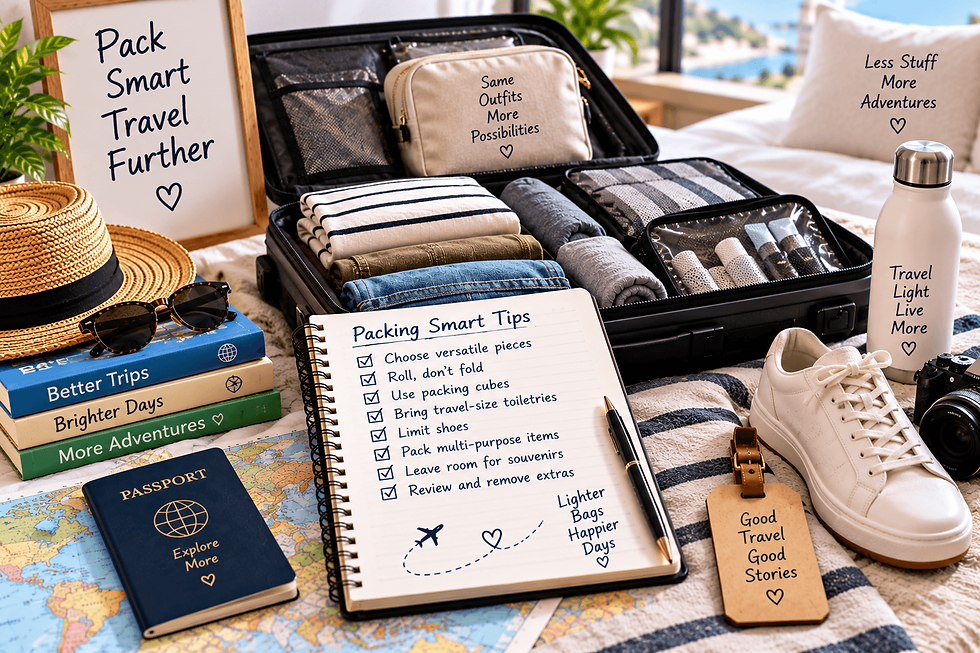
Before putting anything into your suitcase, make a list of the items you truly need. Separate essentials such as travel documents, medications, toiletries, electronics, and clothing from optional items.
A list helps prevent last-minute packing, which often leads to adding too much. It also makes it easier to notice duplicate items or things you are bringing only “just in case.”

BUILD A SIMPLE TRAVEL WARDROBE
Choose clothing pieces that work well together rather than packing completely different outfits for every day. Neutral bottoms, comfortable tops, and lightweight layers can usually be mixed and matched in several ways.
Think about the activities on your itinerary and pack for those specific situations. There is little reason to bring formal clothing, heavy shoes, or specialty items unless you know you will use them.
LIMIT THE NUMBER OF SHOES
Shoes take up a surprising amount of suitcase space. For many trips, a comfortable walking shoe, a casual option, and one additional pair for a specific activity may be enough.
Wear your bulkiest shoes during travel whenever practical. You can also use the inside of packed shoes to store socks or other small items.
CHOOSE TRAVEL-SIZE TOILETRIES
Full-size bottles can quickly add weight and take up valuable room. Transfer shampoo, conditioner, lotion, and other products into travel-size containers when possible.
Before packing toiletries, check what your hotel or accommodation already provides. Leaving behind items that will be available at your destination can free up extra space.
USE LAYERS INSTEAD OF BULKY CLOTHING
If you are traveling somewhere with changing temperatures, pack several lightweight layers instead of one oversized item. A shirt, sweater, and light jacket can be combined as needed and usually provide more flexibility.
For colder destinations, choose pieces that can be worn repeatedly rather than packing multiple heavy coats or sweaters.
PACK MULTIPURPOSE ITEMS
Look for items that can serve more than one purpose. A scarf might work as a light wrap, travel blanket, or accessory, while a tote bag can be used for sightseeing, shopping, or carrying extra items during transit.
The more uses an item has, the easier it is to justify the space it takes in your luggage.
REDUCE UNNECESSARY ELECTRONICS
Phones, tablets, cameras, laptops, chargers, and accessories can become heavy when packed together. Bring only the devices you realistically expect to use.
A multi-port charger or universal travel adapter may also reduce the number of individual accessories you need to carry.
LEAVE ROOM FOR THE RETURN TRIP
Avoid filling your suitcase completely before you leave home. You may pick up souvenirs, clothing, snacks, or other purchases during your trip.
A little extra room can prevent you from struggling to repack or paying for an additional bag on the way home.

FINAL THOUGHTS
Packing lighter is less about leaving important things behind and more about choosing each item intentionally. Focus on versatile clothing, essential toiletries, necessary electronics, and the activities you actually plan to do.
Before closing your suitcase, review everything one final time and remove items that do not have a clear purpose. A lighter bag can make your journey easier while still keeping you prepared for the experiences ahead.
Comments