
How to Protect Your Joints While Staying Active


Staying active is important at every age, but concerns about your knees, hips, shoulders, or other joints can sometimes make exercise feel intimidating.
The answer is not necessarily to stop moving. Regular physical activity can help support strength, mobility, and overall health. The key is choosing activities that fit your abilities and giving your body time to adapt.
A few practical habits can help you stay active while being thoughtful about your joints.
Choose Joint-Friendly Activities

Not every workout puts the same demands on your body.
The Centers for Disease Control and Prevention recommends joint-friendly physical activities for people with arthritis. These are activities that place low stress on the joints and include options such as walking, bicycling, swimming, and water exercise.
You do not have to limit yourself to one activity. You might walk one day, ride a stationary bike another, and spend time in the pool later in the week.
Choose movement that feels comfortable and that you enjoy enough to repeat regularly.
Build Up Gradually
It can be tempting to do too much when you feel motivated, especially if you are returning to exercise after time away.
A gradual approach gives your body an opportunity to adjust.
Start with a manageable amount of activity and slowly increase the time, frequency, or intensity. If 30 minutes feels like too much at first, try shorter sessions.
The CDC notes that physical activity can be broken into smaller amounts throughout the day. What matters is finding realistic opportunities to move and building from there.
Strengthen the Muscles Around Your Joints
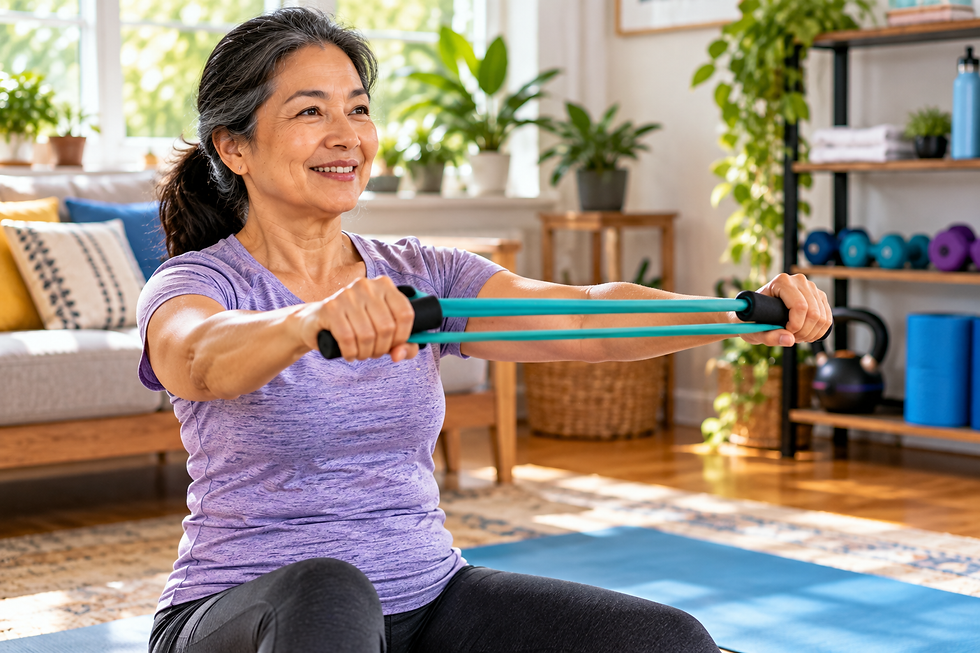
Aerobic exercise is only one part of an active lifestyle.
Muscle-strengthening activities are also recommended for adults. Strong muscles help you perform everyday movements, from climbing stairs to carrying groceries.
Strength training does not have to mean lifting heavy weights. Depending on your abilities, you might use resistance bands, light dumbbells, weight machines, or body-weight exercises.
Focus on controlled movements and appropriate resistance rather than trying to lift as much as possible.
Pay Attention to Your Body

Some discomfort can occur when you begin a new activity, but pain is information worth paying attention to.
The CDC advises people with arthritis to modify activity when symptoms become more severe and to talk with a healthcare professional if pain or other symptoms are concerning.
If a particular movement consistently bothers a joint, consider adjusting the activity rather than forcing your way through it. You may need to reduce the intensity, change the exercise, or give yourself additional recovery time.
Sharp or severe pain should not be treated as proof that a workout is effective.
Keep Movement Part of Your Routine
Protecting your joints does not mean trying to avoid movement altogether.
Instead, think about creating an active routine you can maintain. Mix different types of exercise, progress gradually, and choose activities that work well for your body.
Your routine may also change over time. A workout that feels good today might need to be modified later, and a new activity may become a favorite.
Staying active is not about proving how hard you can push yourself.
It is about finding ways to keep moving comfortably and consistently so physical activity can remain part of your life for years to come.
Comments