
Learning to Let Go of What You Cannot Control


Life rarely unfolds exactly the way you expect. Plans change, people make decisions you cannot influence, unexpected problems appear, and sometimes the answers you want never arrive. Trying to control every outcome can leave you exhausted, frustrated, and constantly worried about what might happen next.
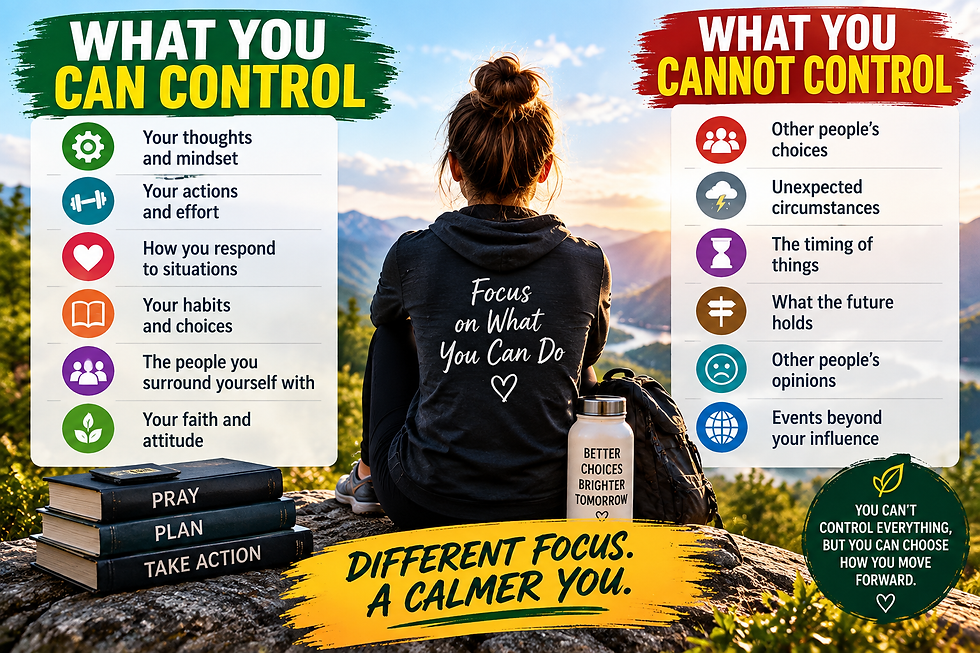
Letting go does not mean becoming careless or giving up on things that matter. It means recognizing the difference between what you can change and what is outside your control. Faith can help you release what you cannot manage while focusing your energy on the choices you can make today.
Recognize What Is Outside Your Control
You can influence many parts of your life, but you cannot control everything. You cannot determine how another person behaves, guarantee that your plans will succeed, prevent every disappointment, or know exactly what the future holds.
When worry begins to take over, ask yourself a simple question: “Can I actually do something about this?” If the answer is yes, identify a practical next step. If the answer is no, continuing to replay the situation in your mind will not change the outcome.
Bring Your Worries to God
Prayer gives you somewhere to take concerns that feel too heavy to carry alone. First Peter 5:7 encourages believers to cast their anxieties on God because He cares for them.
Be specific about what is worrying you. You do not need carefully prepared words. Tell God what you are afraid might happen, what you wish you could change, and why the situation is difficult. Prayer may not immediately change your circumstances, but it can help change how you carry them.

Focus on What You Can Do Today
Uncertainty often pulls your attention toward tomorrow. You may spend hours imagining possible problems before any of them have actually happened.
Jesus addressed this tendency in Matthew 6:34 when He taught His followers not to worry about tomorrow. Instead of trying to solve the entire future, focus on today's responsibilities. Make the phone call, complete the task, have the conversation, or take the next reasonable step available to you.
Accept That Letting Go Is a Process
You may surrender a concern during prayer only to start worrying about it again an hour later. That does not mean you have failed.
Letting go often requires repetition. When the worry returns, recognize it and redirect your attention again. You may need to pray about the same situation many times before you begin to feel less consumed by it. Trust can develop gradually through that repeated practice.
Stop Trying to Control Other People
One of the hardest things to release is another person's choices. You can communicate honestly, offer advice, set boundaries, and treat someone with kindness, but you cannot force them to respond the way you want.
Learning to accept this can protect your peace. Focus on being responsible for your own words, actions, and boundaries rather than carrying responsibility for decisions that belong to someone else.

Trust God With What Happens Next
Proverbs 3:5-6 encourages believers to trust God rather than relying entirely on their own understanding. That becomes especially important when you cannot see how a situation will turn out.
Trust does not require pretending everything will happen according to your preferences. It means believing you can continue walking with God even when the path ahead remains uncertain.
Final Thoughts
Letting go of what you cannot control does not happen once. It is a choice you may need to make repeatedly.
Do what is yours to do, pray about what you cannot change, and give yourself permission to leave tomorrow unanswered. You do not need control over every outcome to move forward with faith, wisdom, and peace.
Comments