
How to Plan Island-Hopping Without Losing a Day to Logistics


Island-hopping can be one of the most memorable ways to travel, giving you several destinations, beaches, towns, and experiences in a single trip. The challenge is that ferries, flights, transfers, hotel check-ins, and luggage can quietly turn an exciting itinerary into several days spent simply getting from place to place.
Good island-hopping is less about squeezing in as many islands as possible and more about creating an efficient route. By planning transportation carefully and leaving enough breathing room, you can spend more of your vacation actually enjoying each destination.
Choose Fewer Islands
It can be tempting to add another island whenever it looks close on a map. However, every additional stop means packing, checking out, traveling to a port or airport, waiting for transportation, and checking in again.
For a shorter vacation, choosing fewer islands usually creates a more enjoyable experience. Spending two or three nights in one place can give you time to explore without constantly preparing for the next transfer.

Build a Logical Route
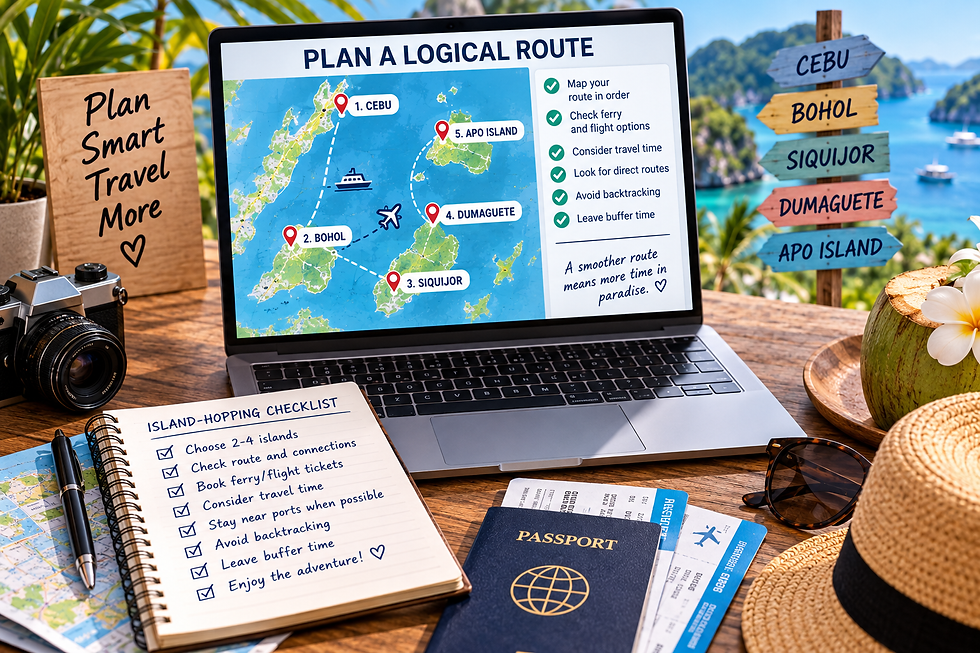
Arrange your destinations in a natural geographical order whenever possible. Repeatedly traveling back and forth between islands wastes both time and transportation costs.
Look at ferry routes and flight connections before deciding the order of your stops. The most efficient itinerary may be different from the route you originally imagined.
Check Transportation Schedules Early
Do not assume ferries or inter-island flights operate frequently throughout the day. Some routes may have limited departures, seasonal schedules, or service only on certain days.
Research transportation before booking accommodation. A perfectly located hotel will not help if the ferry you need does not operate on your planned departure day.
Book Important Transfers in Advance
Popular ferry crossings and regional flights can fill up, particularly during busy travel periods. Once your itinerary is reasonably settled, consider reserving essential transportation.
Keep confirmation details somewhere easy to access. Screenshots or offline copies can be useful when internet service around ports and smaller islands is unreliable.
Stay Near Transportation Hubs When It Helps
An inexpensive hotel on the opposite side of an island may cost you valuable time if you have an early ferry the following morning. For short stays, location can sometimes matter more than extra amenities.
Check how long it takes to reach the port or airport and what transportation is available early in the morning. Staying nearby before an important departure can make the transfer much easier.
Pack With Frequent Moves in Mind
Island-hopping becomes considerably more tiring when you are repeatedly moving oversized luggage. Pack enough for the trip, but consider whether you genuinely need every item.
Organize your bag so essentials are easy to reach. Packing cubes or separate pouches can also reduce the amount of unpacking and repacking required at each stop.

Protect Your Arrival Days
Avoid filling an arrival day with reservations immediately after a ferry or flight. Delays, weather, and transportation changes can quickly disrupt tightly scheduled plans.
Instead, keep arrival-day activities flexible. Explore near your accommodation, visit a beach, enjoy a local meal, or take a walk without committing to a strict start time.
Leave Buffer Time for Connections
A ferry arriving shortly before your flight departs may look efficient on paper, but one delay could create a major problem. Build extra time around important connections, especially before your flight home.
When possible, spend your final night on the island where your international or long-distance departure begins. The extra margin can make the end of your trip far less stressful.
Final Thoughts
A successful island-hopping trip is not measured by how many islands you manage to visit. A smarter route with fewer transfers often gives you more time for beaches, sightseeing, local food, and spontaneous discoveries.
Plan transportation before locking in accommodation, stay realistic about transfer times, and protect important connections with extra breathing room. When logistics support your itinerary instead of controlling it, island-hopping can feel like an adventure rather than a transportation marathon.
Comments