
How to Make Restaurant Meals Fit a Healthier Lifestyle

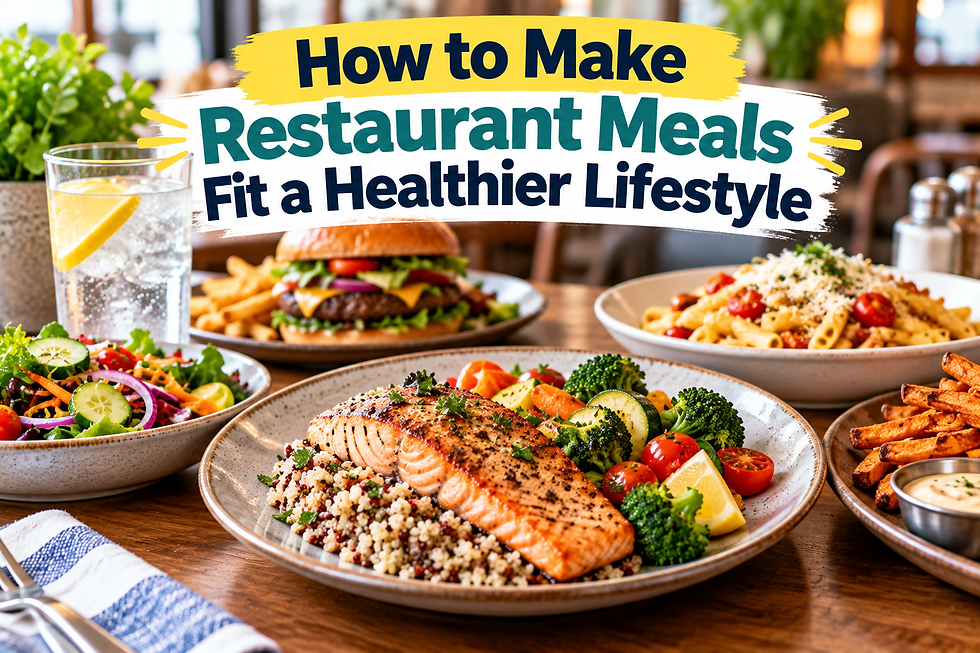
Eating at a restaurant can be one of life's simple pleasures. It is a chance to enjoy good food, spend time with other people, and take a break from cooking.
It can also fit into a healthier lifestyle.
Restaurant meals are often prepared differently from meals you make at home. The U.S. Food and Drug Administration notes that food eaten away from home generally contains more calories, sodium, and saturated fat. That does not mean you need to stop dining out. A few practical choices can help you enjoy restaurant food while keeping your overall eating habits in mind.
Look at the Menu Before You Go
If the restaurant posts its menu online, take a few minutes to look at it before leaving home.
Many large restaurant chains provide calorie information directly on menus, and additional nutrition information may also be available. This can make it easier to compare dishes before you are hungry and ready to order.
Do not focus on calories alone. Consider what the meal actually includes. An entrée containing vegetables, a source of protein, and a whole grain or another satisfying side may provide a more balanced combination of foods.

Pay Attention to How Food Is Prepared
Menu descriptions can give you clues about how a dish is prepared.
The FDA notes that foods described as fried, breaded, battered, creamy, or buttered are typically higher in calories than options described as baked, roasted, steamed, grilled, or broiled.
That does not make fried food "bad." It simply gives you information you can use depending on what you want from that particular meal.
For example, you might choose grilled fish with vegetables one evening and enjoy a favorite fried dish another time.

Make Sides Work for You
Side dishes can completely change a restaurant meal.
French fries may be the automatic option, but many restaurants also offer vegetables, fruit, beans, salad, baked potatoes, or other alternatives.
You can keep the side that comes with your meal or ask whether another option is available. Adding vegetables is an easy way to bring more variety to the plate.
Sauces and dressings are another area where you have flexibility. Asking for them on the side lets you decide how much you want to use. The FDA also recommends this approach for people looking to reduce sodium when eating out.
Choose a Portion That Feels Right
Restaurant portions can sometimes be larger than what you want for one meal.
You do not have to finish everything simply because it arrived on one plate. Consider sharing an entrée, ordering a smaller portion when available, or taking part of the meal home.
The FDA specifically suggests splitting an entrée or saving some for later as practical options when eating away from home.
Most importantly, pay attention to your own hunger and fullness rather than treating an empty plate as the goal.

Think About Your Overall Pattern
One restaurant meal does not determine whether your lifestyle is healthy.
If you regularly eat fruits, vegetables, whole grains, protein foods, and other nutrient-dense choices, there is room for flexibility when you dine out.
Some days you may choose a grilled entrée, vegetables, and water. Other days you may want the burger, fries, and dessert you have been looking forward to.
A healthier lifestyle does not have to remove enjoyment from eating. It is about the choices you make repeatedly over time.
With a little planning and flexibility, restaurant meals can remain an enjoyable part of that bigger picture.
Comments