
The Right to Peaceful Assembly Explained

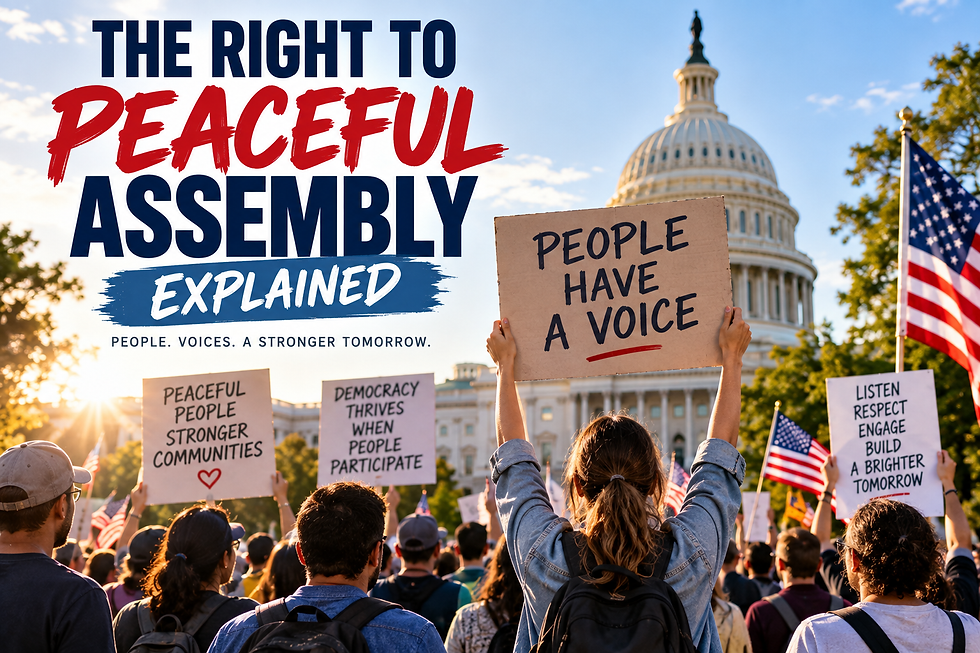
Throughout American history, people have gathered to express ideas, support causes, protest government decisions, and call attention to issues affecting their communities.
The right to do this peacefully is protected by the First Amendment to the U.S. Constitution. Alongside freedoms of religion, speech, and the press, the First Amendment protects “the right of the people peaceably to assemble” and petition the government for change.
Understanding this right helps explain why public gatherings have played such an important role in American civic life.
What Does Peaceful Assembly Mean?
Peaceful assembly generally refers to people gathering together to express ideas, discuss issues, or support a shared cause without violence.
That can include marches, rallies, demonstrations, meetings, picketing, and other forms of collective expression. The Supreme Court has recognized that activities such as public picketing and parading can receive First Amendment protection.
Assembly also works closely with other First Amendment freedoms. People may gather to speak, distribute information, hear different viewpoints, or petition government officials.

Why Is the Right Important?
One person's voice can draw attention to an issue, but a group of people gathering together can demonstrate that a concern is shared by a larger community.
Peaceful assembly gives people a way to participate in public life outside the voting booth.
Citizens can organize around local concerns, public policies, working conditions, civil rights, or countless other issues. They do not have to wait for an election to express their views collectively.
The right also protects people whose opinions may be unpopular. Constitutional protection does not depend on the government agreeing with the message being expressed.
The Right Has Constitutional Limits
The right to peaceful assembly is significant, but it does not mean every gathering can take place anywhere, at any time, or under any circumstances.
Government authorities can impose certain rules governing public demonstrations. Historically, the Supreme Court has recognized that the use of streets and parks for public expression may be regulated to account for public convenience, peace, and order.
For example, rules concerning permits, routes, crowd management, or the use of public spaces may apply depending on the circumstances and applicable law.
The key constitutional questions often involve how restrictions are structured and applied, not simply whether a gathering is controversial.

Peaceful Assembly Has Shaped American History
Public gatherings have long provided Americans with a way to organize and communicate.
The Supreme Court reinforced the constitutional importance of assembly in De Jonge v. Oregon in 1937. The case helped establish that freedom of peaceful assembly is protected from state interference through the Fourteenth Amendment.
Over time, marches, rallies, meetings, and demonstrations have remained visible ways for people with many different viewpoints to participate in civic life.
Democracy Includes the Right to Gather
Democracy involves more than casting a ballot.
It also gives people opportunities to discuss ideas, organize with others, criticize policies, support causes, and communicate their concerns to government officials.
Peaceful assembly provides one way to do those things collectively.
People may strongly disagree with the message of a particular demonstration while still recognizing the constitutional principles governing peaceful public expression.
The right does not guarantee that everyone will agree with what is being said.
Instead, it helps preserve a civic space where people can gather peacefully, make their views known, and participate in the continuing public conversation that is part of democratic government.

Comments