
The Roaring Twenties: Prosperity, Prohibition, and Cultural Change

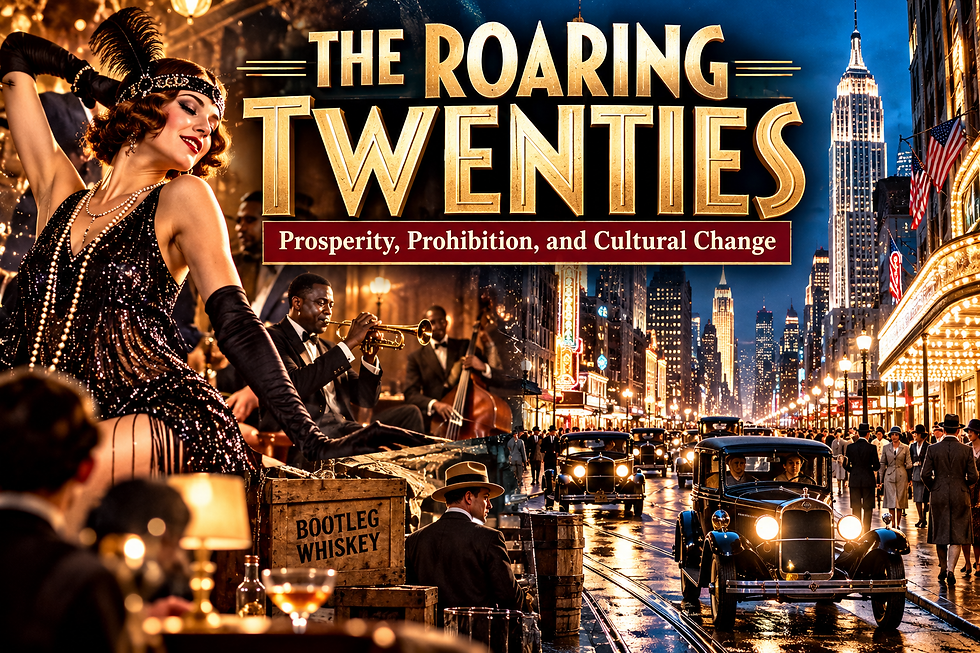
After World War I ended, the United States entered a decade of dramatic change. The 1920s brought economic growth, new technology, expanding consumer culture, and exciting developments in music and entertainment.
Yet the decade also contained striking contradictions. Americans celebrated new freedoms while the government prohibited alcohol. Cities flourished while many rural communities struggled. Beneath the prosperity were economic weaknesses that would become painfully clear by the decade's end.
A Decade of Prosperity
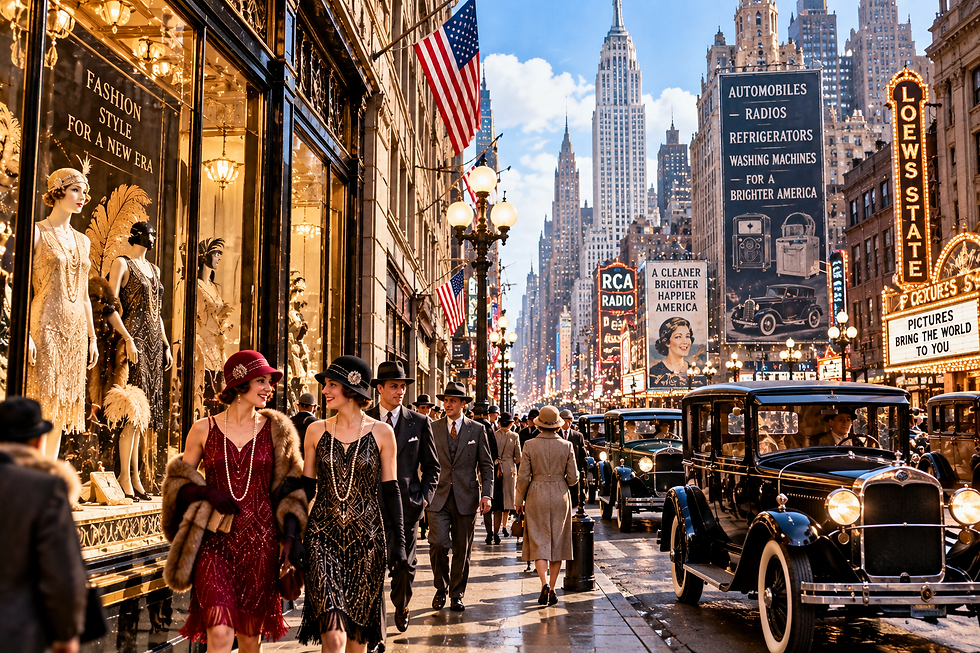
The American economy expanded rapidly during much of the 1920s.
Factories increasingly used mass-production techniques to manufacture automobiles, household appliances, radios, and other consumer goods. Henry Ford's assembly-line methods helped make cars affordable to millions of Americans.
Buying habits changed as well. Installment plans allowed consumers to purchase products immediately and pay for them over time.
Automobiles transformed everyday life. Families could travel farther, new businesses appeared along highways, and suburbs expanded around growing cities.
Radio created another shared experience. News, music, advertisements, and entertainment could suddenly reach millions of homes.
Prohibition Changes American Life

Not every major change involved new products.
The 18th Amendment and the Volstead Act established national Prohibition, restricting the manufacture and sale of alcoholic beverages beginning in 1920.
Supporters hoped Prohibition would reduce crime and social problems associated with alcohol. Instead, illegal drinking remained widespread.
Secret drinking establishments known as speakeasies became popular, particularly in cities. Criminal organizations profited from producing and distributing illegal alcohol, helping figures such as Al Capone become notorious.
Enforcing Prohibition proved extremely difficult, and the policy became increasingly unpopular.
Jazz and a Changing Culture

The 1920s also produced a cultural revolution.
Jazz became one of the decade's defining sounds. The music grew from African American communities and reached increasingly large audiences through clubs, recordings, and radio.
Harlem in New York City became the center of an extraordinary period of Black artistic and intellectual creativity known as the Harlem Renaissance. Writers, musicians, artists, and thinkers challenged stereotypes while celebrating Black life and culture.
Popular entertainment expanded through movies as Hollywood became an increasingly powerful cultural force.
Women Challenge Old Expectations
Women's lives were changing as well.
The 19th Amendment had guaranteed women the right to vote nationwide in 1920. During the decade, some young women openly challenged traditional expectations about clothing, dating, work, and public behavior.
The image of the "flapper," with shorter dresses and bobbed hair, became a symbol of these changing attitudes.
However, the flapper represented only part of women's experiences, and many traditional expectations remained firmly in place.
Prosperity With Limits
The Roaring Twenties are often remembered as an age of endless prosperity, but wealth was not evenly distributed.
Farmers struggled with falling agricultural prices, and many workers did not share equally in the decade's economic gains. Consumer debt grew, while speculation helped drive stock prices upward.
In October 1929, the stock market crashed.
The crash did not erase everything the decade had changed, but it helped bring the optimism of the Roaring Twenties to a dramatic end.
The 1920s left a complicated legacy. Prosperity, Prohibition, jazz, consumer culture, and changing social expectations transformed American life and helped shape the modern United States.
Comments