
Starting a Creative Project Later in Life

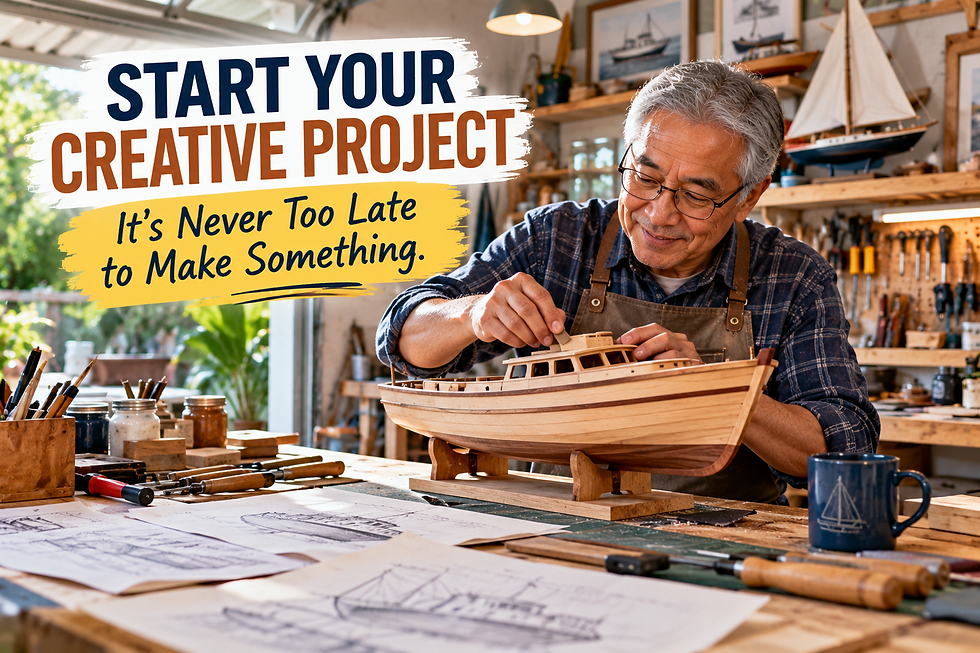
Maybe you've always wanted to write a book.
Or paint. Build furniture. Learn photography. Record family stories. Make pottery. Start a garden journal. Perhaps there's an idea you've carried around for years but never had enough time to explore.
Later in life can be a surprisingly good time to finally begin.
You may have more control over your schedule, decades of experience to draw from, and fewer reasons to worry about whether your project impresses anyone else.
The hardest part may simply be giving yourself permission to start.
Don't Wait Until You Feel Creative
It's easy to imagine that creative people wake up inspired and immediately know what to make.
Real projects are often much less dramatic.
You sit down with an empty notebook. You pick up a camera and take 20 ordinary photographs. You sketch something that doesn't look the way you imagined. You write a page and decide the next morning that half of it needs changing.
That's still creating.
Instead of waiting for inspiration, give your project a regular place in your week. Even 30 minutes on a Tuesday morning can be enough to begin building momentum.

Start Smaller Than Your Big Idea
Your first project doesn't need to become a novel, gallery exhibition, or handmade dining table.
Make the goal smaller.
Write one short story instead of planning a 300-page book. Paint one small canvas. Photograph your neighborhood for a week. Record one family memory. Build a simple wooden box before attempting an elaborate piece of furniture.
Finishing something small can teach you more than endlessly planning something ambitious.
You can always make the next project bigger.
Let Yourself Be a Beginner
Starting something later in life doesn't mean you should already know how to do it.
You might take a class, watch tutorials, borrow books from the library, or ask someone experienced for help.
Your first attempts probably won't match the work of someone who has practiced for 20 years.
They don't need to.
Being a beginner gives you permission to experiment. You can try different materials, techniques, and ideas without having to protect a reputation or prove anything.
Curiosity is enough reason to continue.

Use the Life You've Already Lived
One advantage you have now is material.
You've met people, visited places, experienced changes, made mistakes, celebrated successes, and collected stories along the way.
Those experiences can become part of what you create.
A family recipe can inspire a cookbook project. Old photographs might become a scrapbook or memoir. Travel memories could influence paintings. Years spent gardening might become a collection of sketches and notes for your grandchildren.
Your project doesn't have to be about your past, but your past gives you plenty to work with.

Make Something Because You Want To
Not every creative project needs an audience.
You don't have to sell your paintings, publish your writing, grow thousands of followers, or turn a hobby into a business.
You can create simply because the process interests you.
If you eventually want to share your work, wonderful. If the finished project stays on your bookshelf, hangs in your hallway, or gets passed around the family, that's worthwhile too.
The important part is beginning.
That idea you've been carrying for years doesn't need to remain something you'll get to "someday."
Pick up the pen, camera, brush, clay, fabric, or tools.
Make something.
Comments