
The Underground Railroad: Courage, Risk, and the Fight for Freedom


The Underground Railroad was not a railroad, and it did not run underground. It was a secret network of people, routes, and safe places that helped enslaved African Americans escape slavery, particularly during the decades before the Civil War.
Those who sought freedom faced enormous danger. Escape could mean traveling for days or weeks while avoiding slave catchers and other threats. The Underground Railroad became a powerful example of courage, resistance, and the determination of people willing to risk their lives for freedom.
A Secret Path to Freedom
The Underground Railroad developed through informal networks rather than a single organized system. Free Black communities, abolitionists, religious groups, formerly enslaved people, and other supporters provided assistance to people escaping slavery.
Safe locations were sometimes called “stations,” while people who guided freedom seekers were known as “conductors.” Participants might provide food, clothing, shelter, directions, transportation, or information about safer routes.
Secrecy was essential. Helping an enslaved person escape could bring serious legal consequences, particularly after the Fugitive Slave Act of 1850 strengthened federal requirements for the capture and return of people who had escaped slavery.

The Risks of Escaping Slavery
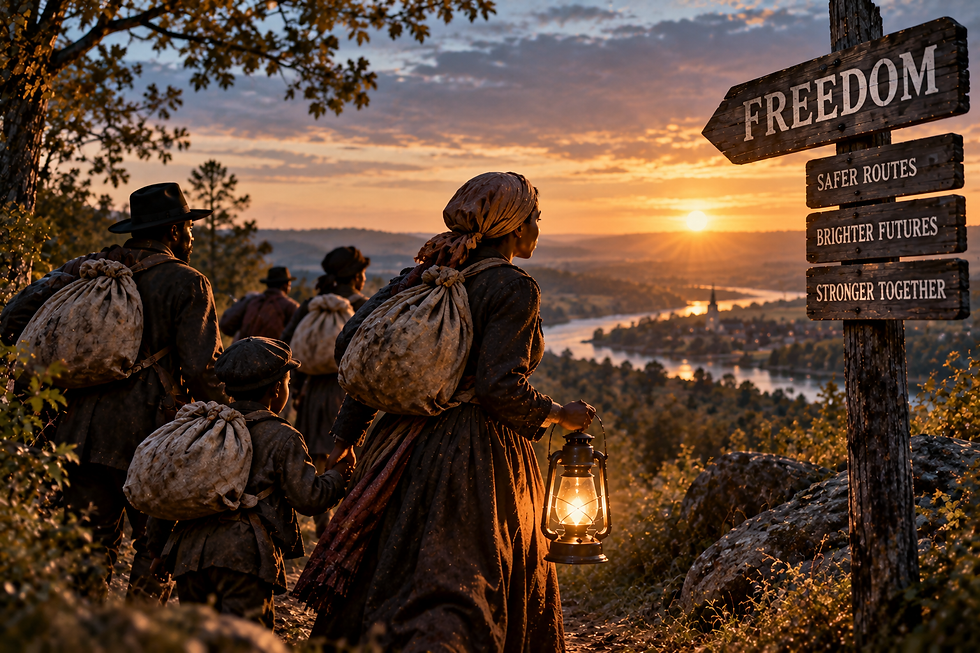
Leaving slavery required extraordinary courage. Freedom seekers often traveled at night and moved through forests, fields, towns, and unfamiliar territory while trying to avoid detection.
The journey could involve hunger, exhaustion, harsh weather, injury, and separation from family. Capture could result in being returned to slavery and facing severe punishment.
Reaching a free state did not always guarantee safety. Under federal fugitive slave laws, people who escaped could still be captured in the North. For some, reaching Canada offered greater protection from being forced back into slavery.
Harriet Tubman and the Fight for Freedom
Harriet Tubman became one of the most famous figures associated with the Underground Railroad. Born into slavery in Maryland, Tubman escaped in 1849 but repeatedly returned to help others reach freedom.
She guided family members and other freedom seekers along dangerous routes while avoiding capture. Her knowledge, determination, and willingness to take tremendous risks made her an important figure in the struggle against slavery.
Tubman was not alone. Many people participated in the Underground Railroad, including individuals whose names were never recorded. Black communities played an especially important role by sharing information, offering shelter, and helping freedom seekers continue their journeys.

Resistance Beyond Escape
The Underground Railroad challenged slavery by helping individuals take control of their own lives. Every successful escape represented resistance to a system built on denying people their freedom.
It also increased tensions between supporters and opponents of slavery. Southern slaveholders demanded stronger protections for what they considered their property, while abolitionists increasingly challenged laws requiring the return of freedom seekers.
These conflicts became part of the larger national struggle over slavery that eventually contributed to the Civil War.
Final Thoughts
The Underground Railroad was built on difficult choices and enormous personal risks. Freedom seekers demonstrated remarkable determination by leaving slavery despite the dangers of capture, punishment, and an uncertain journey.
The people who helped them also risked serious consequences. Together, their actions showed how resistance could take many forms and how individuals and communities could challenge injustice. The Underground Railroad remains an enduring story of courage, sacrifice, and the fight for freedom.
Comments