
What the Bible Teaches About Contentment


Contentment can be difficult when there is always something else to want. A larger home, more money, a different job, better health, or an easier season of life can begin to feel like the missing piece that would finally make everything better.
The Bible presents contentment differently. Biblical contentment does not mean giving up on goals or pretending difficult circumstances do not matter. Instead, it involves learning to trust God and appreciate what you have without allowing changing circumstances to determine your peace.
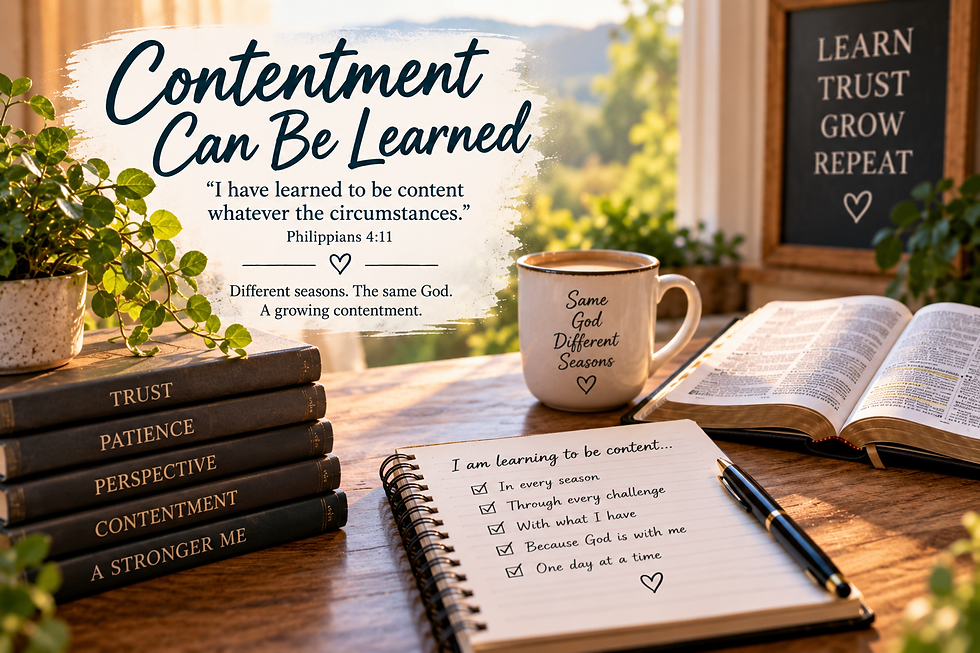
Contentment Can Be Learned
In Philippians 4:11-13, Paul explains that he learned to be content regardless of his circumstances. He had experienced both abundance and need, yet his sense of stability was not completely dependent on either situation.
The word "learned" is important. Contentment may not come naturally, especially during seasons of uncertainty or disappointment. Like other parts of faith, it can develop gradually as you practice trusting God through different circumstances.
More Possessions Do Not Guarantee Contentment
It is easy to assume that having more will automatically make you happier. Scripture repeatedly challenges that idea.
Hebrews 13:5 warns against the love of money and encourages believers to be content with what they have, connecting that contentment with God's promise that He will never leave or forsake them. Money and possessions have practical value, but they cannot provide everything you need emotionally or spiritually.

Gratitude Helps You Notice What You Already Have
Contentment and gratitude are closely connected. When your attention stays focused on what is missing, it becomes easy to overlook what is already good.
Try intentionally noticing the things you might normally take for granted. A meal, a safe home, supportive people, meaningful work, or a quiet moment can all become reasons for gratitude. Thanking God for what is present can help shift your attention away from constant comparison.

Comparison Can Steal Your Peace
Comparison can make a perfectly good life suddenly feel inadequate. Social media, conversations, and even relationships can expose you to someone else's achievements, possessions, or opportunities.
Instead of measuring your life against another person's circumstances, pay attention to what God has placed in front of you. Someone else's success does not automatically mean you are falling behind. Contentment allows you to celebrate others without treating their lives as the standard for your own.
Contentment Does Not Mean You Stop Growing
Being content does not mean becoming passive. You can pursue a promotion, save for a home, improve your health, learn a new skill, or work toward another meaningful goal while remaining grateful for your current life.
The difference is where you place your hope. A healthy goal can motivate you, but it does not need to become a condition for happiness. You can work toward tomorrow while still appreciating today.
Trust God With What You Do Not Have
Some desires remain unanswered for a long time. During those seasons, contentment may require trusting God with what you cannot currently change.
Bring those desires honestly to Him in prayer. Contentment does not require denying what you want. It means refusing to let an unmet desire prevent you from recognizing God's goodness in your present circumstances.
Final Thoughts
The Bible teaches that contentment is not something you find once every circumstance becomes ideal. It is something you can learn while life is still imperfect.
Practice gratitude, resist unnecessary comparison, pursue healthy goals without making them the source of your peace, and trust God with what remains unresolved. Contentment grows when you learn to appreciate today's blessings while leaving tomorrow in God's hands.
Comments