
Why Family Stories Should Be Passed Down


Every family has stories.
Some are funny stories repeated at holiday dinners. Others are about difficult years, unexpected opportunities, sacrifices, traditions, or relatives younger generations never had the chance to meet.
These stories may seem ordinary to the people who lived them. But over time, they become something much more valuable. They become part of a family's history.
Passing those stories down helps preserve more than memories. It gives future generations a connection to the people and experiences that helped shape their family.
Family Stories Help Us Understand Where We Came From
Names and dates can tell you who your relatives were, but stories tell you who they were as people.
Maybe a grandfather worked two jobs to support his family. Perhaps a grandmother moved across the country without knowing anyone. Maybe your parents struggled financially when they were young but rarely discussed it.
Those details provide context that a family tree cannot.
They help younger generations understand the experiences, decisions, and challenges that influenced the family they know today.

They Preserve Lessons Learned the Hard Way
Families accumulate wisdom over generations.
Stories about mistakes, hardships, relationships, careers, money, and major life decisions can contain lessons that remain useful decades later.
A story about someone losing a business may teach resilience. A story about relatives repairing a broken relationship might demonstrate forgiveness.
Passing down these experiences allows younger family members to learn from people they may never have met.

Stories Keep Loved Ones Present
Eventually, photographs may be all that remains of someone.
Without stories, younger relatives might recognize a face but know almost nothing about the person behind it.
Sharing memories keeps personalities alive.
Tell younger family members about Grandpa's terrible jokes, Grandma's favorite recipe, the uncle who could fix almost anything, or the aunt who always opened her home when someone needed help.
Those small details can transform an old photograph into a real person.
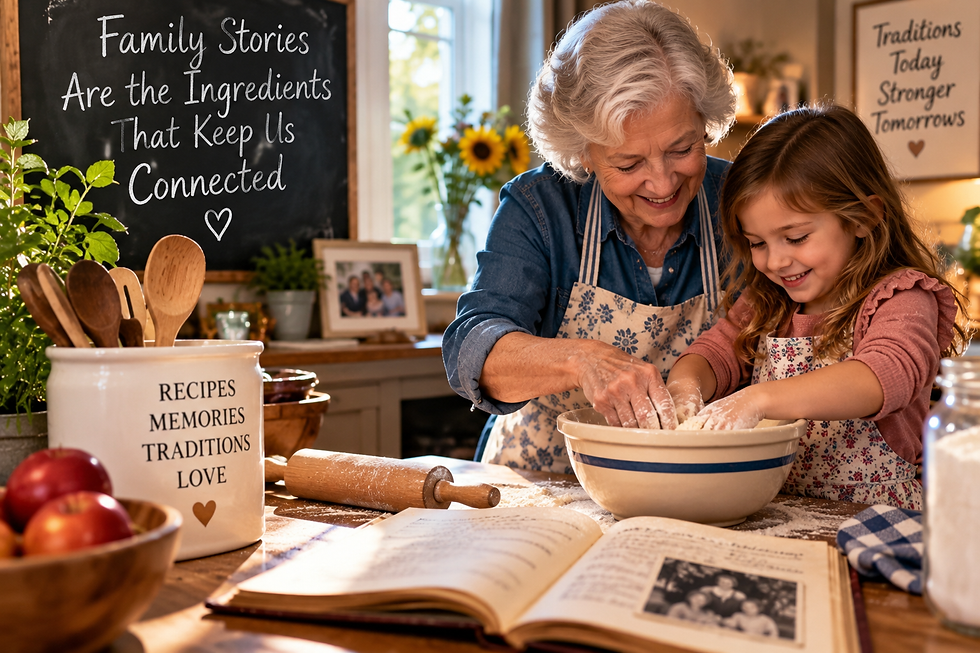
They Create a Sense of Belonging
Knowing family history can remind people that they're part of something larger than themselves.
Families change. Children grow up, relatives move away, and new generations create traditions of their own. Stories provide a thread connecting those different generations.
They can also help explain why certain traditions matter.
A holiday meal becomes more meaningful when someone knows who started it and why. An old recipe becomes more than food when its history is remembered.
You Don't Need to Write a Family History Book
Preserving family stories doesn't have to become a complicated project.
Record a conversation with an older relative. Write down a favorite memory. Label old photographs with names, dates, and places. Save meaningful letters or recipes. Ask parents and grandparents questions while you still have the opportunity.
Even a few sentences can preserve something that might otherwise disappear.
Start With One Story
Family history is often lost quietly.
One generation assumes the next generation already knows the stories. Then years pass, people are gone, and someone eventually realizes there are questions nobody can answer anymore.
Don't wait until that happens.
Choose one story worth remembering and share it.
Then share another.
The stories may feel ordinary today, but someday they could become one of the most meaningful things your family passes down.
Comments