
Why Fiber Matters for Healthy Aging

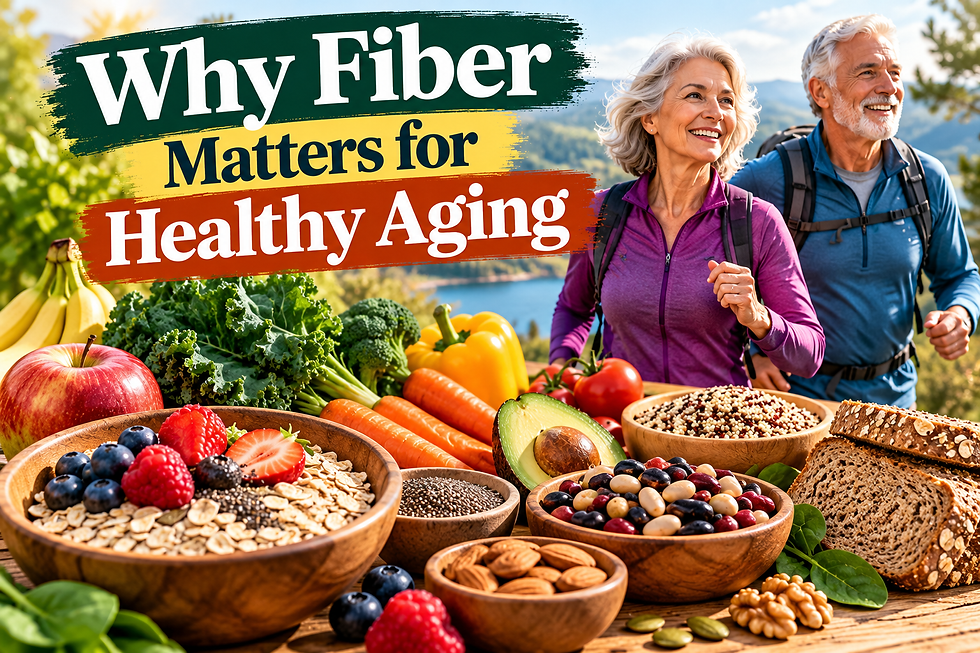
As you get older, eating well becomes an important part of supporting your health. Protein, vitamins, and minerals often get plenty of attention, but fiber deserves a place in the conversation too.
Fiber is a type of carbohydrate found naturally in plant foods. Your body does not digest it the same way it digests other carbohydrates. Instead, fiber moves through the digestive system and plays several roles along the way.
For older adults, getting enough fiber can support digestive regularity, heart health, and a balanced eating pattern.
Fiber Helps Keep You Regular
Constipation can become more common with age. The National Institute on Aging notes that older adults may experience fewer bowel movements, harder stools, or more difficulty passing them.
Fiber can help by adding bulk to stool and supporting regular bowel movements. Fruits, vegetables, beans, whole grains, nuts, and seeds are all useful sources.
Increasing fiber gradually is generally more comfortable than making a dramatic change overnight. Drinking enough fluids is also important as you add more fiber-rich foods.

It Supports Heart Health
Heart health becomes increasingly important as the years pass, and fiber can be part of a heart-healthy eating pattern.
Research has linked higher dietary fiber intake with better cardiovascular outcomes. A large systematic review and meta-analysis found that higher fiber intake was associated with lower risks of all-cause and cardiovascular mortality.
Other research has found that increasing fiber intake can help improve cardiovascular risk factors, including LDL cholesterol and blood pressure in certain populations.
Fiber is not a substitute for medical care, medication, or other healthy habits. Instead, it is one part of an overall eating pattern that can support long-term health.

Fiber Can Help With Blood Sugar Management
Fiber-rich foods can also be useful when thinking about blood sugar.
Because fiber is not digested like other carbohydrates, higher-fiber meals can affect how quickly carbohydrates are absorbed. Research involving adults with diabetes or prediabetes has found that higher-fiber diets can improve measures of blood sugar control and several cardiometabolic risk factors.
Choosing whole or minimally processed foods can make adding fiber relatively simple. Oatmeal, beans, lentils, berries, pears, vegetables, and whole-grain bread are everyday options.
Small Changes Can Add Up
You do not need to completely rebuild your diet to eat more fiber.
Try adding berries to breakfast, choosing whole-grain bread instead of refined white bread, adding beans to soup or salad, or snacking on fruit and nuts. Keeping the skin on suitable fruits and vegetables can provide additional fiber too.
Variety matters. Different plant foods provide different types of fiber along with vitamins, minerals, and other nutrients.

Make Fiber Part of Healthy Aging
There is no single food that determines how well you age. Healthy aging depends on many factors, including your overall diet, physical activity, sleep, medical care, and individual health needs.
Still, fiber is a valuable part of the picture. Large research reviews consistently associate higher fiber intake with better long-term health outcomes, particularly cardiovascular and all-cause mortality.
The practical takeaway is simple: regularly include a variety of fruits, vegetables, whole grains, beans, nuts, and seeds.
Those everyday foods can make fiber a natural part of eating well as you age.
Comments