
Why Hydration Matters More as You Get Older

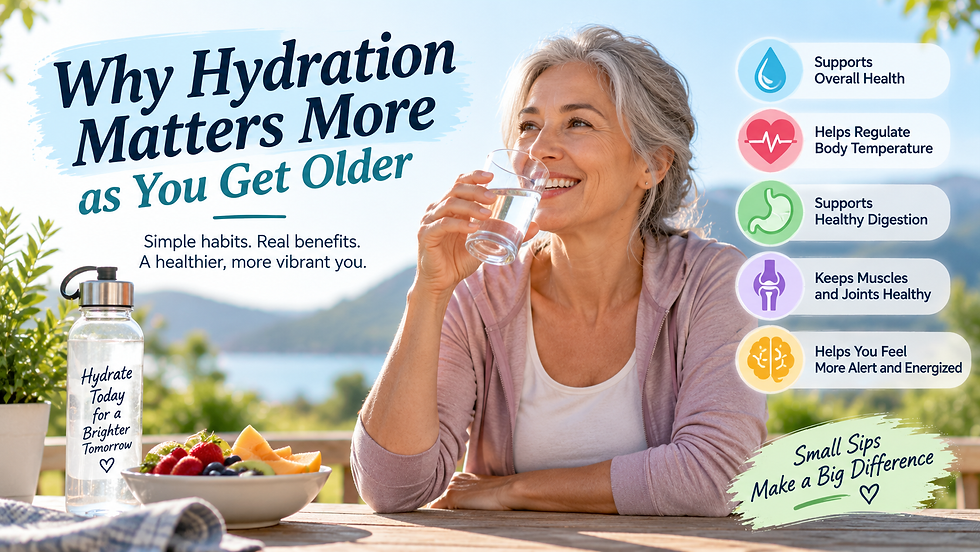
Drinking enough water is important at every stage of life, but hydration deserves extra attention as you get older. Changes in the body can make it easier for older adults to become dehydrated, sometimes before they even realize they are thirsty.
Staying hydrated supports many everyday functions, from regulating body temperature to helping your digestive system work properly. Making hydration part of your daily routine is a simple way to support your overall health as you age.
Your Sense of Thirst Can Become Less Reliable
Thirst is your body's natural reminder to drink, but that signal may become less noticeable with age. You might need fluids even when you do not feel particularly thirsty.
Instead of waiting for thirst, make drinking water a regular habit throughout the day. Keeping a glass or reusable bottle nearby can provide a helpful visual reminder.

Water Helps Regulate Body Temperature
Your body relies on water to help control its temperature. This becomes especially important during exercise, warm weather, or extended periods outdoors.
Older adults may have more difficulty adjusting to temperature changes. Drinking fluids regularly can help support your body's natural temperature-regulation processes and replace fluids lost through sweating.
Hydration Supports Healthy Digestion
Water plays an important role in digestion and helps move waste through the digestive system. Not drinking enough fluids may contribute to constipation, which can become more common with age.
Drinking water throughout the day, along with eating fiber-rich foods and staying physically active, can support regular digestion.
Your Muscles and Joints Need Fluids Too
Hydration contributes to normal muscle function and helps lubricate joints. This matters when you want to stay active through walking, strength training, gardening, or other everyday activities.
Being well hydrated before, during, and after physical activity can help replace the fluids your body loses. Regular movement and adequate hydration can work together as part of an active lifestyle.
Dehydration Can Affect How You Feel
Even mild dehydration can leave you feeling tired, sluggish, or less focused. Headaches, dizziness, dry mouth, and darker urine can also be signs that your body may need more fluids.
These symptoms can have many possible causes, so they should not automatically be blamed on dehydration. However, paying attention to your fluid intake is a useful part of maintaining healthy daily habits.
Water Is Not Your Only Option
Plain water is a convenient choice, but it is not the only source of hydration. Milk, soups, and other beverages can contribute to your overall fluid intake.
Many foods also contain water. Fruits and vegetables such as watermelon, oranges, cucumbers, strawberries, and tomatoes can help provide fluids while adding useful nutrients to your diet.

Build Hydration Into Your Routine
Small habits can make hydration easier. Try drinking water with meals, keeping a bottle within reach, or having a glass after your morning walk.
Individual fluid needs vary depending on health, activity, medications, climate, and other factors. Some medical conditions also require fluid restrictions, so follow your healthcare professional's recommendations when applicable.

Final Thoughts
Hydration can be easy to overlook, especially when you are not feeling thirsty. As you get older, being more intentional about drinking fluids can help you stay ahead of dehydration.
Make hydration a regular part of your day rather than something you think about only when you feel thirsty. Simple, consistent habits can help support digestion, physical activity, temperature regulation, and everyday well-being.
Comments