
Why Routine Can Help During Times of Uncertainty


Uncertainty can make even ordinary days feel harder to navigate.
You may be waiting for important news, dealing with changes at work, worrying about finances, adjusting to a family situation, or simply not knowing what the next few months will look like. When so much feels unpredictable, it can be tempting to put normal routines aside until things settle down.
But a simple routine can give your day some structure when circumstances around you feel unsettled.
You cannot control every outcome. You can, however, create a few reliable points in your day.
Routine Gives Your Day a Framework
Without some structure, uncertain periods can begin to feel like one long stretch of waiting and worrying.
A routine creates a basic framework.
Getting up around the same time, eating breakfast, starting work, taking a lunch break, or going for an evening walk gives different parts of your day a beginning and an end.
Your schedule does not need to be packed. A few predictable activities may be enough to make the day feel more manageable.

Familiar Actions Require Fewer Decisions
Uncertainty often comes with plenty of decisions already.
Adding dozens of small choices about when to eat, what to do next, or whether you should complete a basic task can make an exhausting period feel even more complicated.
Routine can remove some of those decisions.
If you normally prepare breakfast after getting dressed or take a short walk after dinner, you do not have to decide from scratch every day.
Familiar habits can make ordinary responsibilities easier to navigate when your attention is elsewhere.

Small Routines Can Bring Your Attention Back to Today
When the future feels uncertain, your thoughts can easily jump ahead.
What if something goes wrong? What happens next month? When will things change?
A routine cannot answer those questions, but it can give you something concrete to focus on now.
Making your morning coffee, watering your plants, preparing lunch, or taking the dog outside are small actions happening in the present.
Sometimes, concentrating on what is directly in front of you is more useful than repeatedly trying to solve a future you cannot yet predict.
Your Routine Should Leave Room for Change
Structure can be helpful without becoming rigid.
If you miss your usual walk, sleep later one morning, or need to rearrange your plans, you have not ruined your routine.
Think of it as a guide rather than a set of rules.
During difficult periods especially, flexibility matters. Your energy, responsibilities, and circumstances may change, so your routine should be able to change with them.
Start With a Few Reliable Anchors
You do not need to plan every hour.
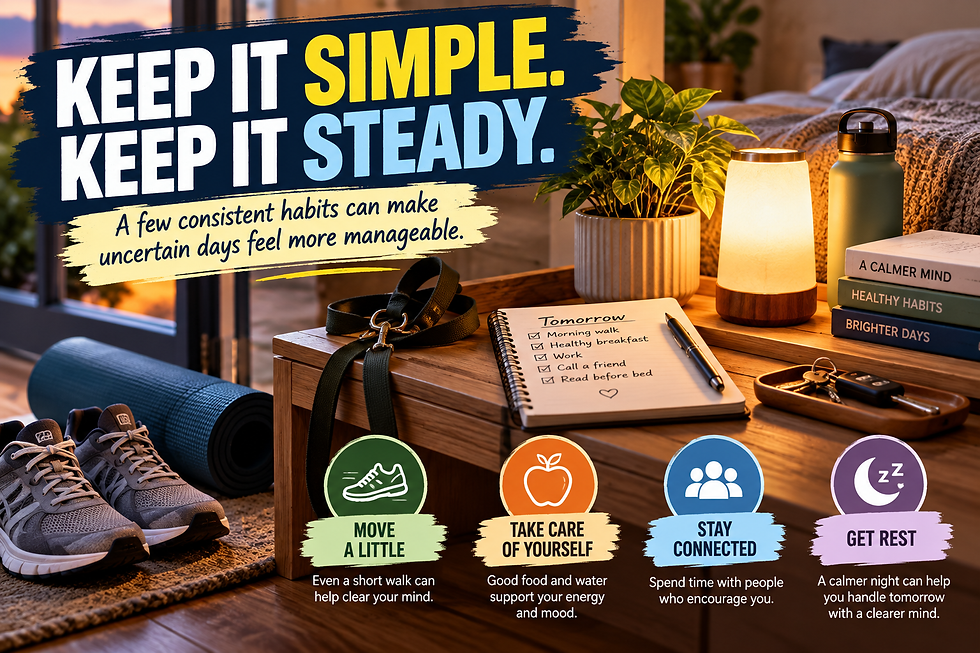
Choose two or three things that can become dependable parts of your day. That might be eating breakfast at the table, stepping outside each afternoon, calling someone after dinner, or reading before bed.
Keep those anchors simple enough to maintain when life becomes busy.
A routine will not remove uncertainty. What it can do is give you a little familiarity inside it. When the bigger picture feels unclear, a few predictable moments can help you focus on the day you actually have in front of you.
Comments