
HOW TO BEAT JET LAG AND ENJOY YOUR FIRST DAY


Jet lag can turn an exciting arrival into a day of heavy eyelids, poor concentration, and an overwhelming desire to crawl into bed. It happens when your body's internal clock is still following the schedule of the place you left rather than the local time at your destination.
Although you cannot always eliminate jet lag completely, you can make the adjustment easier. A few practical choices before your flight and during your first day can help your body adapt while allowing you to start enjoying your trip.
ADJUST YOUR SCHEDULE BEFORE YOU LEAVE
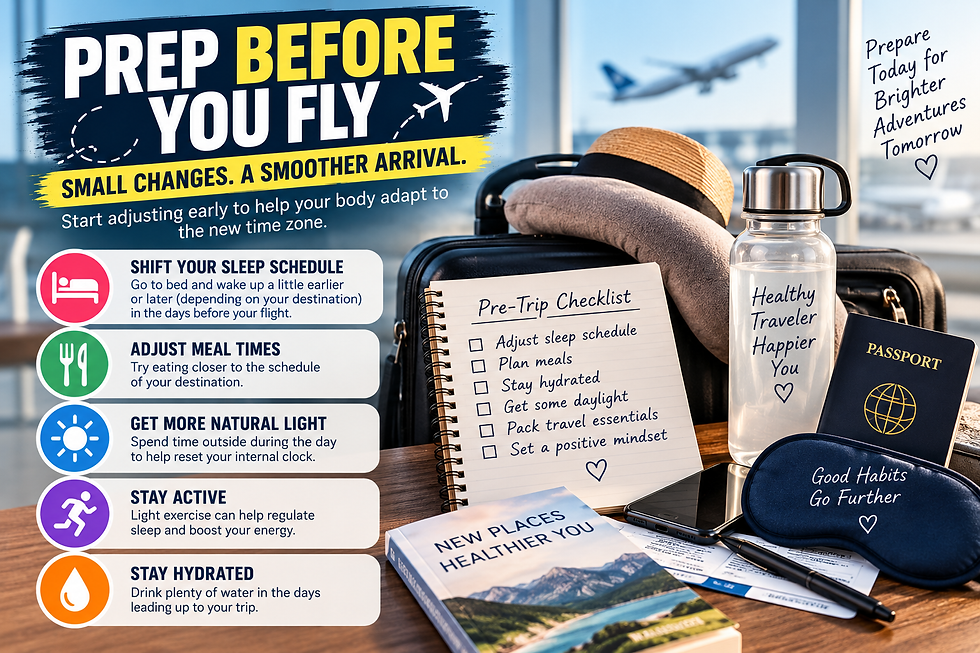
If you are crossing several time zones, consider gradually shifting your sleep schedule before departure. Moving bedtime and wake-up time a little closer to your destination's schedule may make the eventual change feel less abrupt.
You do not need to completely transform your routine. Even small adjustments over several days can begin preparing you for the new schedule.
SWITCH TO LOCAL TIME
Once you arrive, start thinking according to the destination's local time. Eat meals, plan activities, and prepare for bed based on where you are now rather than the time back home.
Changing the clock on your phone or watch can help reinforce the transition. Constantly calculating what time it is at home can make it harder to mentally settle into your destination.
GET SOME DAYLIGHT
Natural light is an important signal for your body's internal clock. Spending some time outdoors after arrival can help your body begin adjusting to the local day-night schedule.
Instead of immediately staying inside your hotel room, consider taking an easy walk or sitting outdoors. The goal is not strenuous sightseeing but gentle exposure to your new environment.
KEEP YOUR FIRST DAY SIMPLE
Your arrival day is usually not the best time for an ambitious itinerary. After a long flight, complicated tours, lengthy drives, and tightly scheduled reservations can quickly become exhausting.
Plan something easy and flexible instead. Explore the neighborhood around your accommodation, visit a nearby café, enjoy a relaxed meal, or take a short walk through a local park.

STAY HYDRATED
Long flights and busy travel days can make it easy to forget about hydration. Keep water available and drink regularly throughout your journey and after arrival.
Be thoughtful about excessive caffeine and alcohol as well. Both can affect how you feel and may interfere with the sleep schedule you are trying to establish.
BE CAREFUL WITH NAPS
When you arrive exhausted, sleeping for several hours during the afternoon can be tempting. However, a long nap may leave you wide awake when local bedtime arrives.
If you truly need to rest, consider keeping the nap relatively short. Set an alarm, then get up and return to activities that follow the local schedule.

EAT ACCORDING TO LOCAL MEALTIMES
Meals provide another opportunity to establish a new routine. Try having breakfast, lunch, and dinner at approximately the times people normally eat at your destination.
Choose meals that leave you feeling comfortable, particularly immediately after a long journey. Your first day is about helping your body settle into a manageable rhythm.
AIM FOR NORMAL LOCAL BEDTIME
After staying awake through the day, try to go to bed at a reasonable local hour rather than extremely early. A calming evening routine can make the transition easier.
Dim the lights, reduce stimulating activities, and give yourself time to wind down. Your body may need several days to fully adjust, so do not expect one perfect night to solve everything.
FINAL THOUGHTS
Beating jet lag is less about forcing yourself through exhaustion and more about helping your internal clock recognize its new schedule. Local daylight, appropriate meal times, hydration, sensible naps, and a manageable first-day itinerary can all support that adjustment.
Most importantly, give yourself some flexibility. Your first day does not need to include every major attraction to be worthwhile, and starting slowly can leave you better prepared to enjoy the rest of your trip.
Comments