
Simple Ways to Keep Your Dog Mentally Stimulated


Dogs need more than physical exercise to stay engaged. Walks and playtime help keep their bodies moving, but giving them opportunities to think, explore, sniff, and solve simple problems can add variety to everyday life.
Mental stimulation does not need to involve expensive toys or complicated training. Many activities can fit naturally into your dog's routine, and even a few short sessions throughout the day can give them something interesting to do.
Turn Mealtime Into an Activity
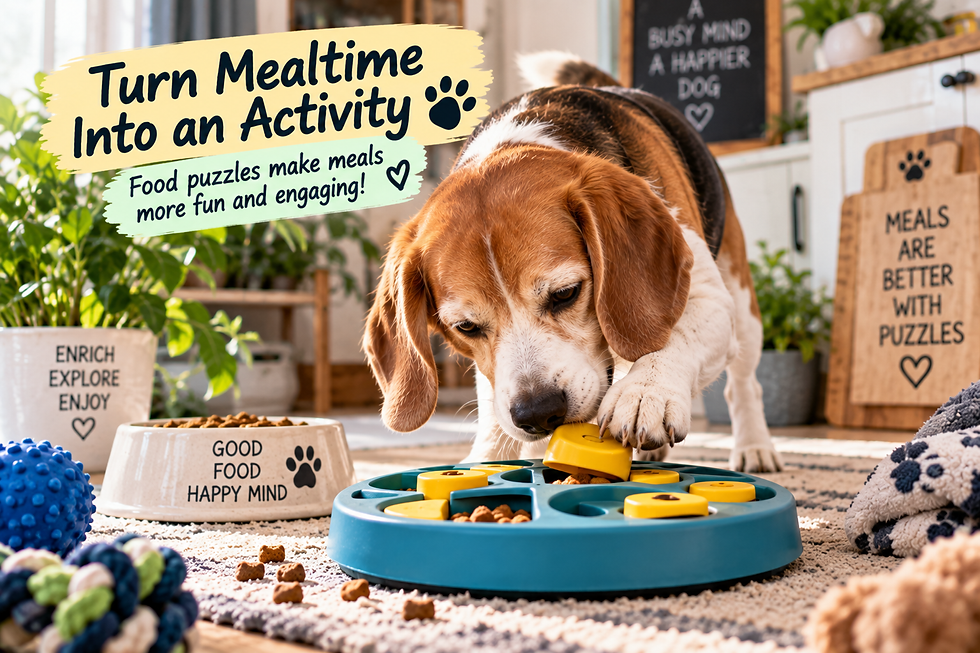
Serving every meal in a regular bowl is convenient, but occasionally changing how your dog receives their food can make mealtime more engaging.
Try a puzzle feeder, snuffle mat, or treat-dispensing toy. You can also scatter part of their meal in a safe area and let them search for it. Choose activities appropriate for your dog's size and abilities, and supervise when necessary.
Let Them Use Their Nose
Sniffing gives dogs an opportunity to investigate their surroundings. Instead of rushing through every walk, occasionally allow your dog extra time to stop and explore interesting scents.
You can bring scent games indoors too. Hide a few treats in easy-to-find places and encourage your dog to search for them. Gradually make the game more challenging as they understand what to do.

Practice Short Training Sessions
Training provides mental exercise while also helping you communicate with your dog. Sessions do not have to be long to be useful.
Spend a few minutes practicing familiar cues or teaching a simple new skill. Keep the experience positive, use appropriate rewards, and finish before your dog loses interest. Training should feel enjoyable rather than frustrating.

Rotate Their Toys
A large pile of toys available every day can eventually become less interesting. Instead, consider keeping some toys stored away and rotating them periodically.
Bringing back a toy after it has been unavailable for a while can renew your dog's curiosity. Include different options, such as balls, chew toys, tug toys, and interactive toys, based on what your dog safely enjoys.
Create Simple Games at Home
Everyday household activities can become enrichment opportunities. You might place treats under lightweight cups and let your dog find the correct one or create a simple search game using safe cardboard boxes.
Always consider safety when creating homemade activities. Avoid small pieces your dog could swallow, and supervise games involving objects that could be chewed or torn apart.
Change Up Your Walking Route
Walking the same route every day can still provide exercise, but occasionally exploring somewhere different can introduce new sights and smells.
You do not necessarily need to travel far. Walking down another street, visiting a dog-friendly park, or simply reversing your normal route can make a familiar outing feel different.
Give Them Time to Rest
Mental stimulation should not mean keeping your dog busy every minute. Dogs also need opportunities to sleep and relax without interruption.
Pay attention to your dog's age, personality, health, and energy level. A young, energetic dog may enjoy more challenging activities, while an older dog may prefer shorter, gentler games.
Final Thoughts
Keeping your dog mentally stimulated can be surprisingly simple. Food puzzles, scent games, short training sessions, toy rotation, and varied walks can all make everyday routines more interesting.
Experiment with different activities and notice what your dog enjoys most. The goal is not constant entertainment, but providing safe opportunities to explore, think, play, and interact with you.
Comments