
Sleep After 60: Simple Habits That Can Help You Rest Better


Getting a good night’s sleep can sometimes become more challenging with age. After 60, changes in sleep patterns, health conditions, medications, and daily routines can affect how easily you fall asleep and how often you wake during the night.
Poor sleep should not simply be dismissed as an unavoidable part of getting older. While individual sleep needs vary, a few practical habits can create better conditions for restful, consistent sleep.
Keep a Consistent Sleep Schedule
Going to bed and waking up at approximately the same time each day can help reinforce your body’s natural sleep-wake cycle. Try to maintain your schedule even on weekends when possible.
If you need to adjust your bedtime, make changes gradually rather than suddenly shifting your routine by several hours.
Create a Relaxing Bedtime Routine
A predictable evening routine can signal that it is time to wind down. Reading, listening to calming music, taking a warm shower, or practicing gentle relaxation exercises may help you transition toward sleep.
Choose activities that feel peaceful rather than stimulating. Keeping the final part of your evening relatively quiet can make bedtime feel less rushed.

Make Your Bedroom Comfortable
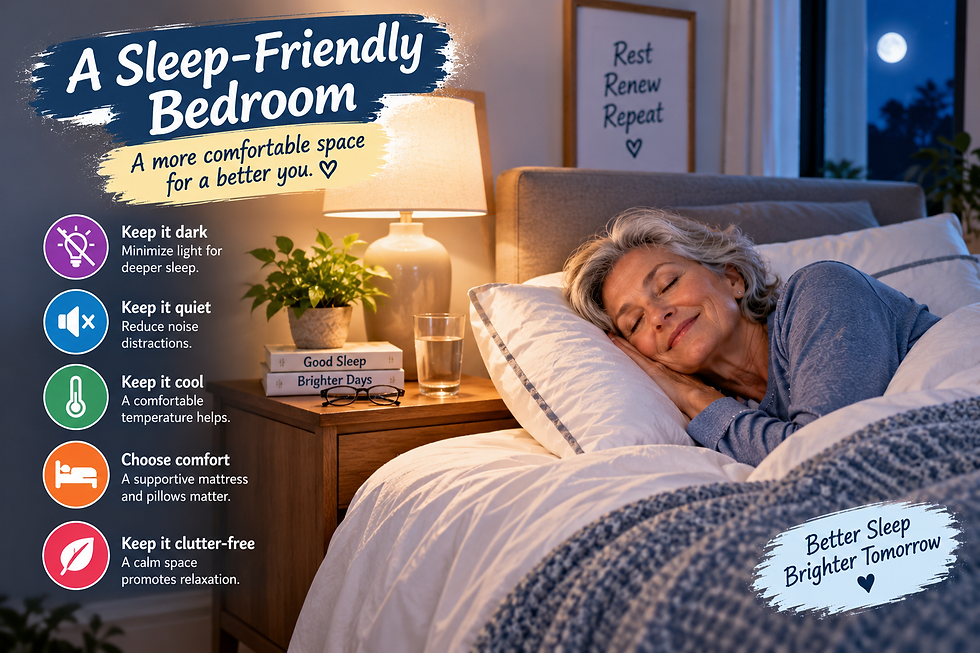
Your sleep environment can influence how easily you rest. A bedroom that is dark, quiet, and comfortably cool may make sleeping easier.
Consider reducing unnecessary light and noise and making sure your mattress and pillows provide appropriate comfort and support.
Get Daytime Physical Activity
Regular physical activity can support overall health and may also contribute to better sleep. Walking, gardening, swimming, strength exercises, and other activities can provide opportunities to stay active during the day.
Choose activities appropriate for your abilities and health. Some people may find vigorous exercise close to bedtime stimulating, so pay attention to how exercise timing affects your sleep.

Pay Attention to Naps
A short daytime nap can be refreshing, but long or late naps may make it harder for some people to fall asleep at night.
If nighttime sleep is becoming difficult, consider whether your nap schedule could be contributing. Earlier and shorter naps may work better for some older adults.
Be Mindful of Caffeine and Alcohol
Caffeine can remain in the body for hours and may interfere with sleep when consumed later in the day. Coffee, tea, energy drinks, chocolate, and some medications can contain caffeine.
Alcohol may initially make someone feel sleepy, but it can disrupt sleep later in the night. Paying attention to when and how much you consume can help identify patterns affecting your rest.
Limit Screens Before Bed
Phones, tablets, televisions, and computers can keep your mind engaged when you are trying to wind down. Bright light from screens may also interfere with the signals involved in your sleep-wake cycle.
Consider creating a screen-free period before bedtime and replacing scrolling or television with a quieter activity.
Know When to Ask for Help
Occasional poor sleep is common, but persistent problems deserve attention. Frequent insomnia, loud snoring, breathing interruptions, unusual movements during sleep, or significant daytime sleepiness can sometimes point to an underlying issue.
Discuss ongoing sleep problems with a healthcare professional, especially if they interfere with daily life or began after a medication change.
Final Thoughts
Better sleep after 60 often begins with simple, consistent habits. A regular schedule, comfortable bedroom, daytime activity, thoughtful nap habits, and a relaxing evening routine can all support better rest.
Give new habits time to become part of your routine. If sleep problems continue despite these changes, professional guidance can help identify possible causes and appropriate next steps.
Comments